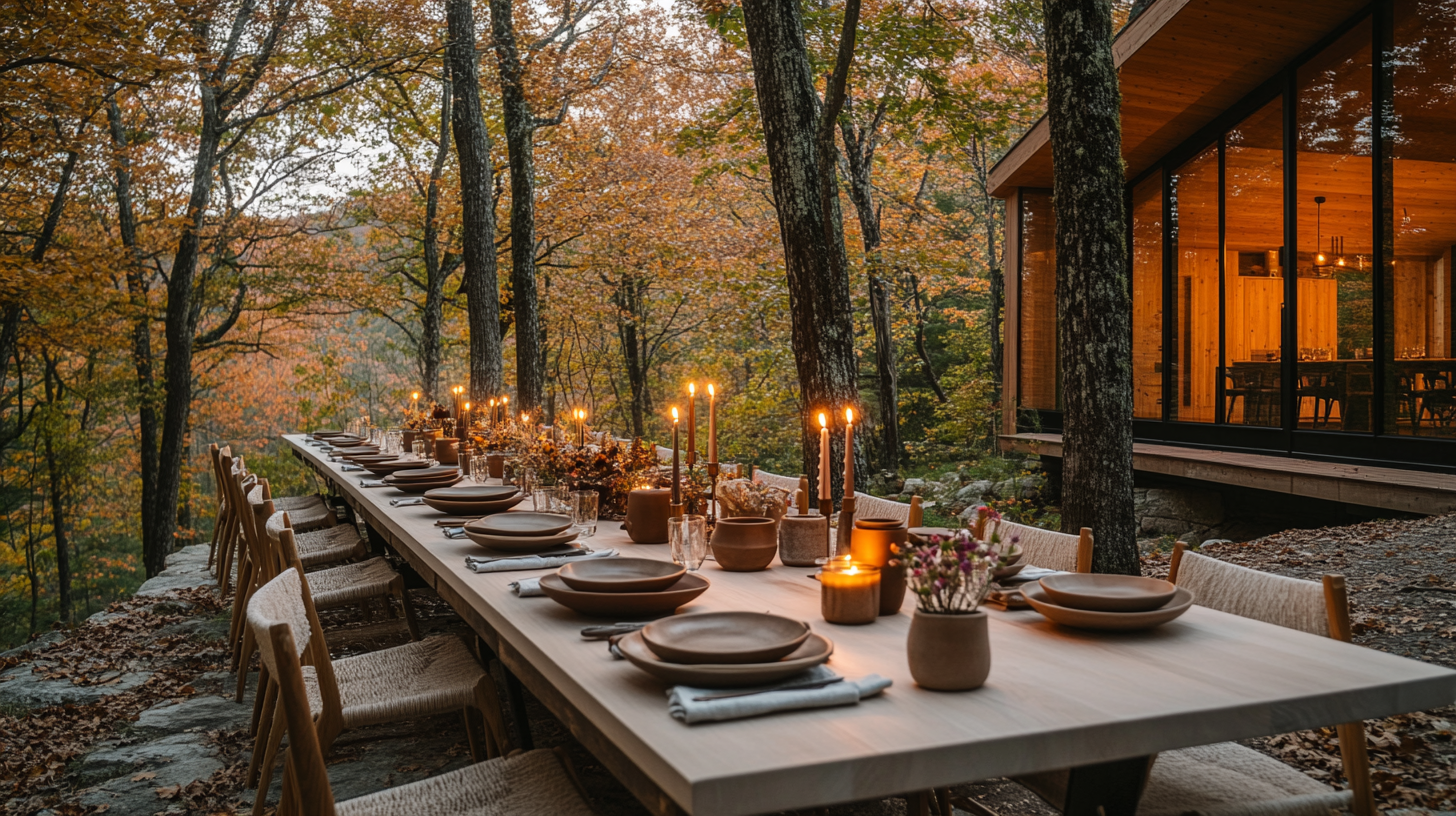
I
The Cabins
Stone and timber at the water’s edge.
The creek is your only clock.
The Arrival
The forest led you here.
You leave the main property on a stone pathway that narrows as it enters the trees. The sounds change first — the murmur of the lodge falls away, replaced by creek water and wind through full green canopy. Ferns brush your ankles. Wildflowers line the edges of the path in colors that feel improvised. The light goes dappled, golden, moving.
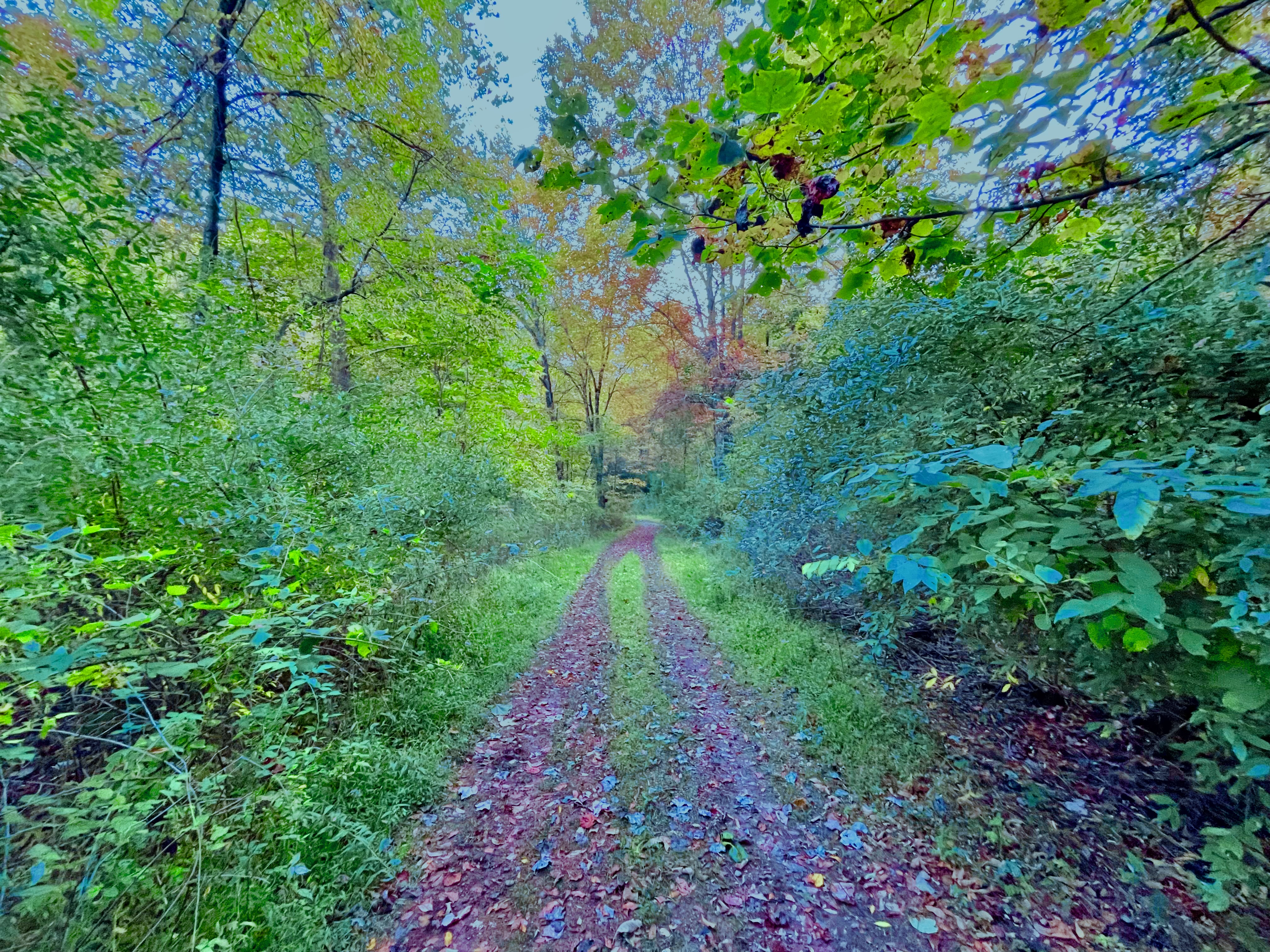
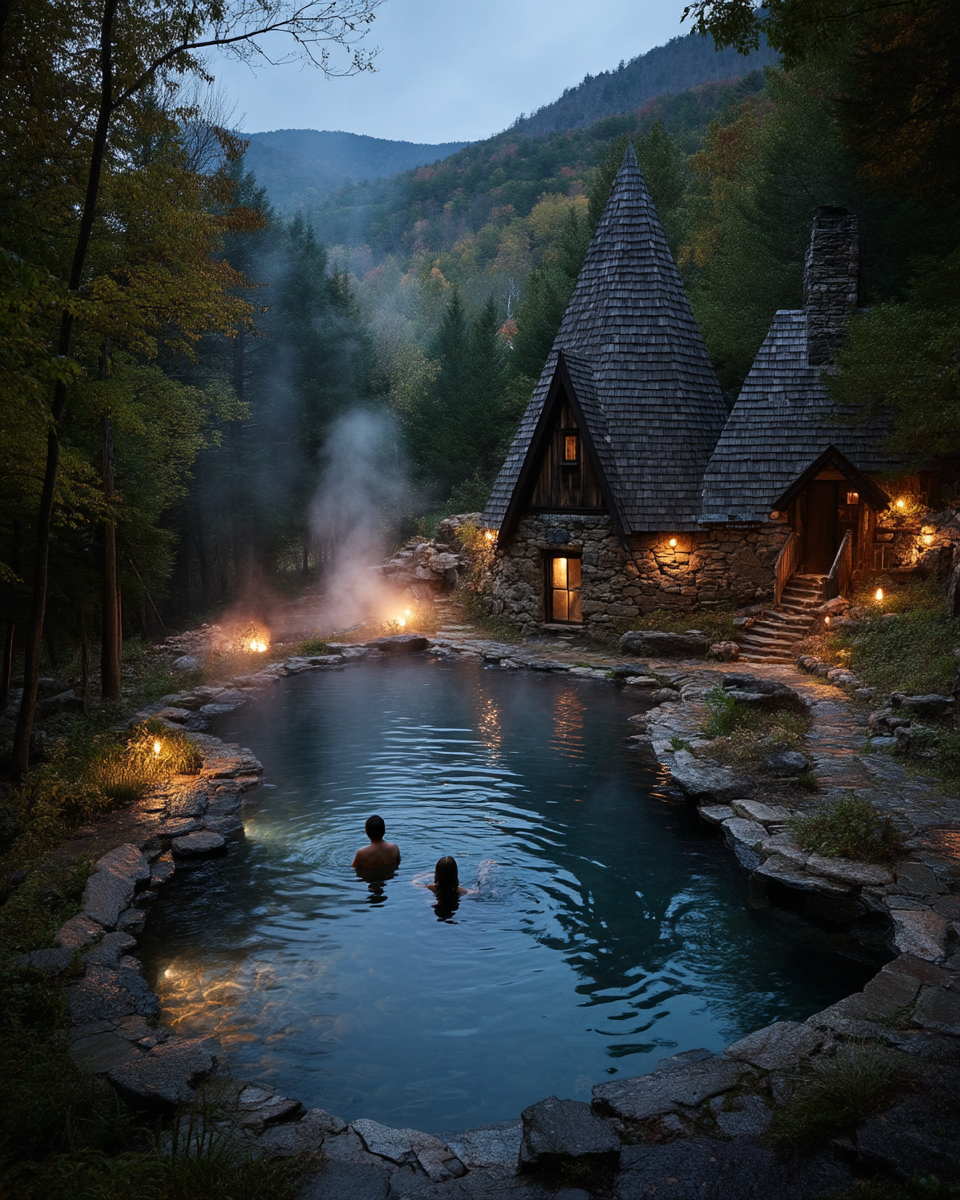
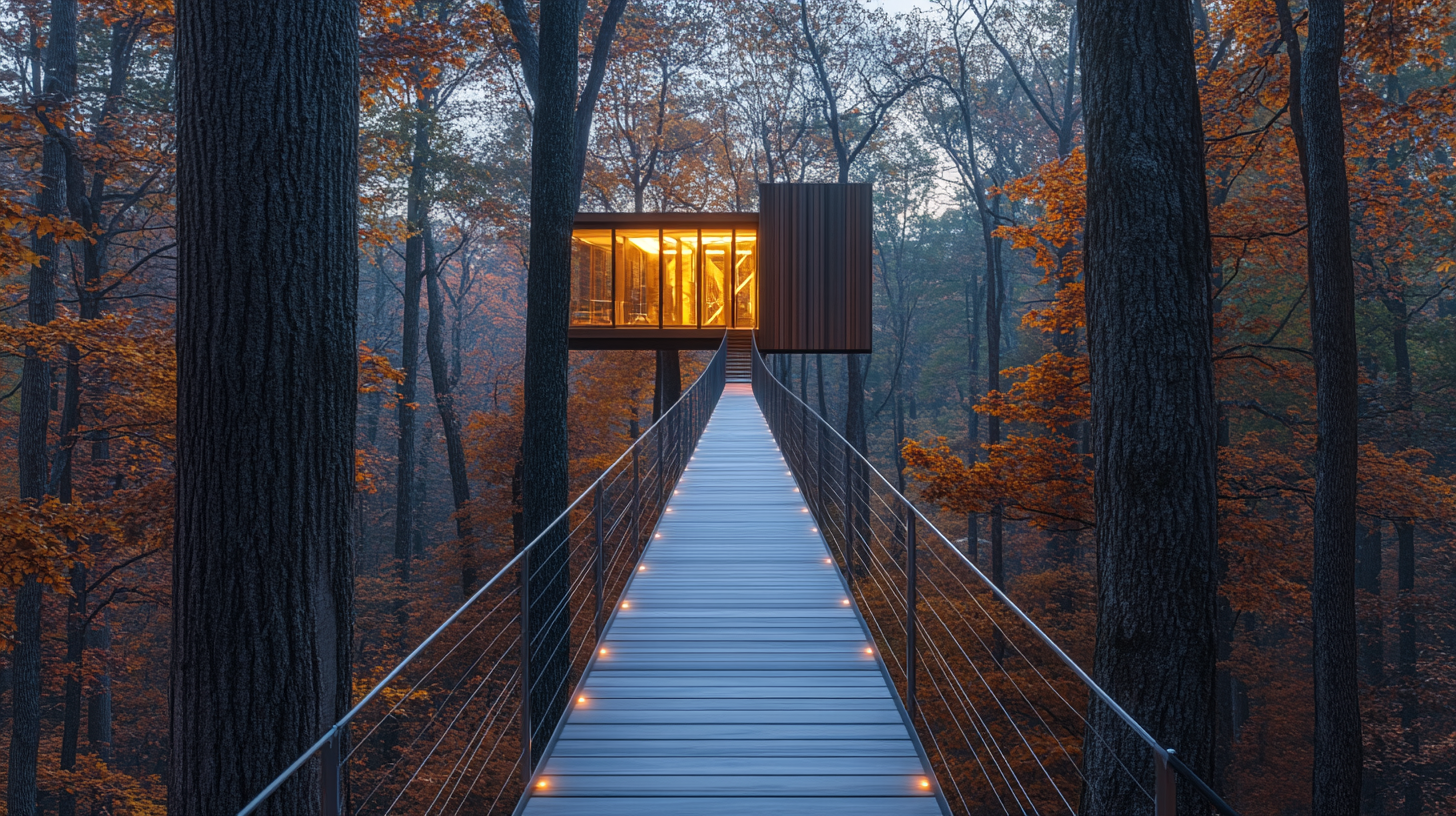
Then the creek appears — clear water over smooth stone, the sound suddenly everywhere, intimate. You follow it. Through the last stand of hemlocks, the cabin materializes: steep dark timber, a wall of glass reflecting the forest back at itself, blackened steel framing, a thin line of copper at the roofline catching the last amber light. It doesn’t announce itself. It was always here. You just hadn’t found it yet.
The creek is the first thing you hear.
It will be the last thing you hear at night.
The door is unlocked — it was never locked. Inside, the stove is already lit. The polished concrete floor is warm beneath your feet. The glass wall frames the forest so completely that for a moment you aren’t sure if you’re inside or out. Your shoulders drop. Your phone stays in your pocket. The cabin has already started its work on you.
The Craft
Six centuries of
geometry in walnut
Hutsul master carvers have shaped walnut and beech for six centuries. Their geometric language — eight-pointed stars, intertwining vines, carved rosettes — appears throughout the cabin. Not as decoration. As inheritance.
The headboard in your bedroom was carved by a single artisan over four months. The door surrounds, the furniture details, the walnut panel in the living space — each piece carries a geometric vocabulary passed from master to apprentice without interruption since the fifteenth century. You run your fingers along the carving and feel the chisel marks. They are not imperfections. They are proof that a human being made this, slowly, with care, for you.
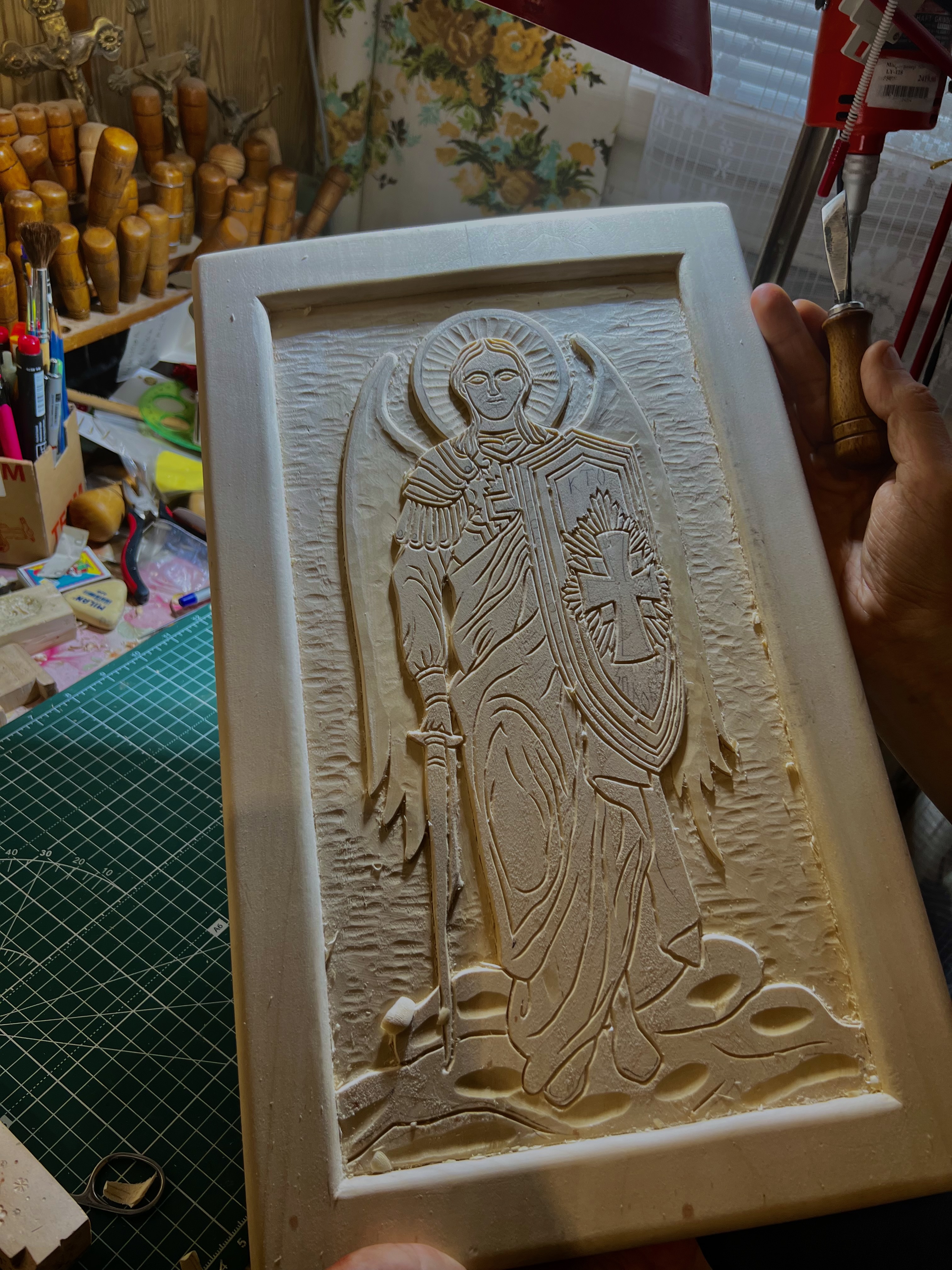
Each rosette takes a full day. The master carver does not hurry.
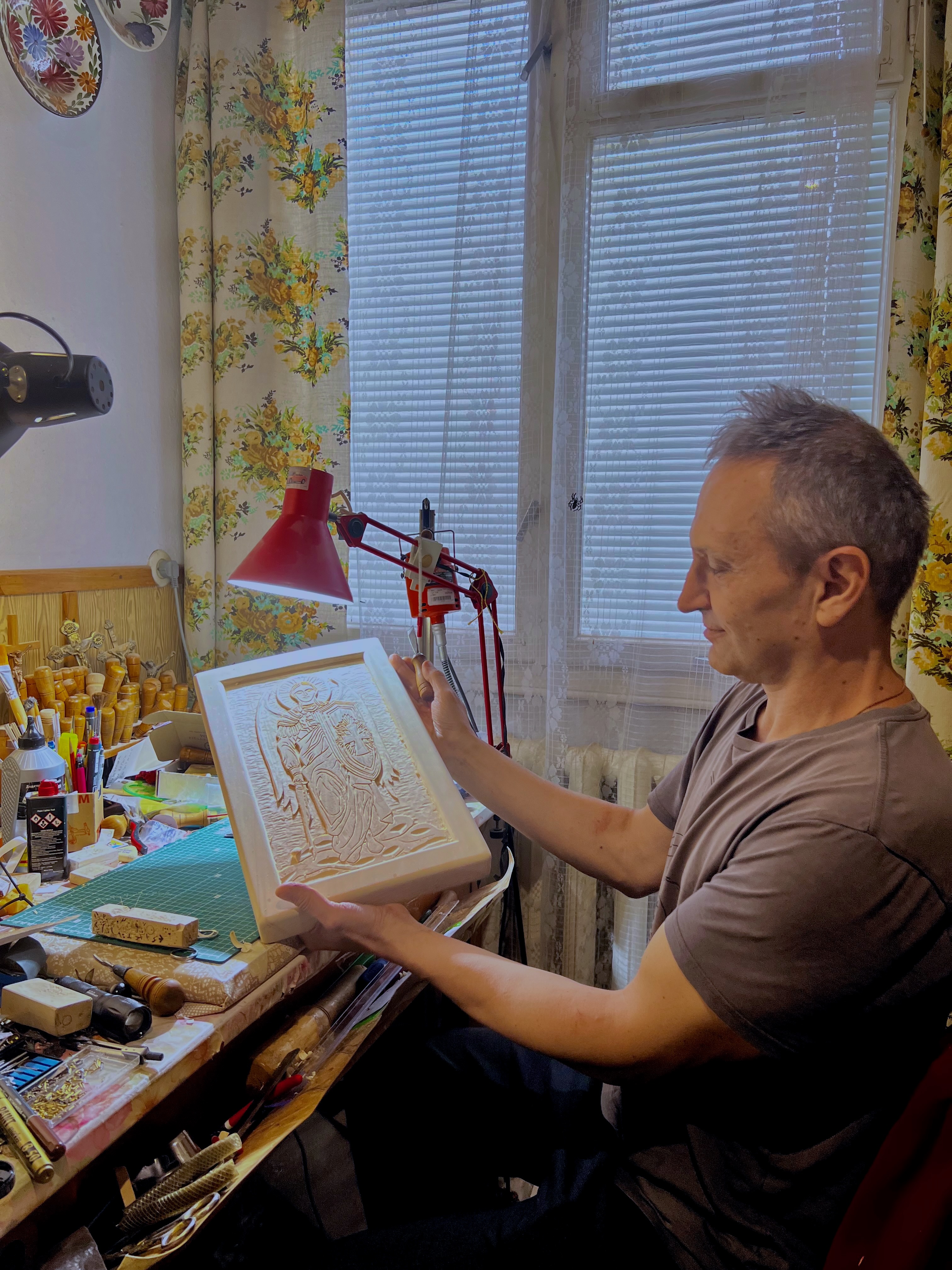
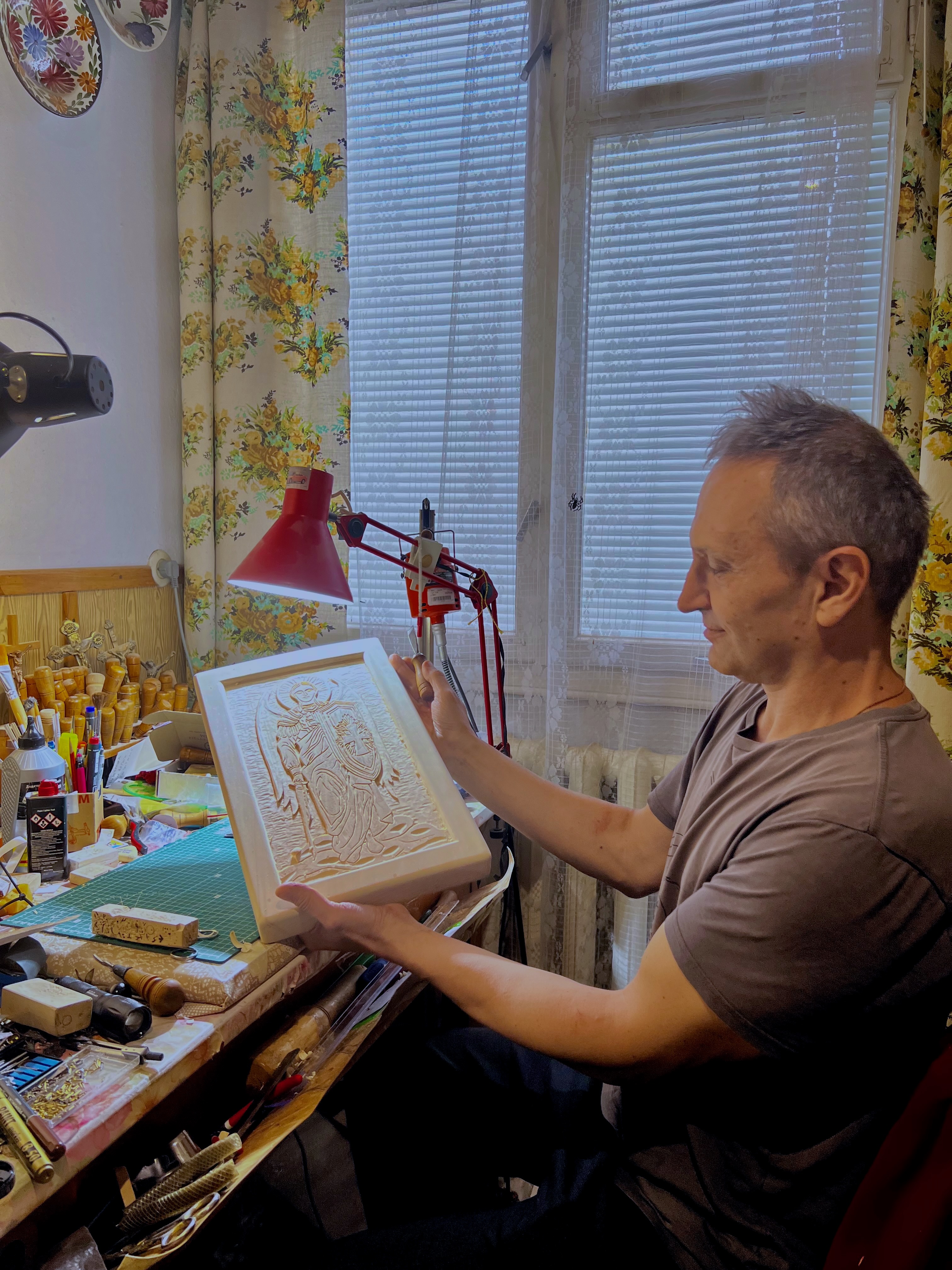
“The cabin is Carpathian Modern. The craft inside it is six hundred years old. That tension — between the clean line and the carved rosette — is the entire point.”
The Walkthrough
Six spaces. Each one a world.
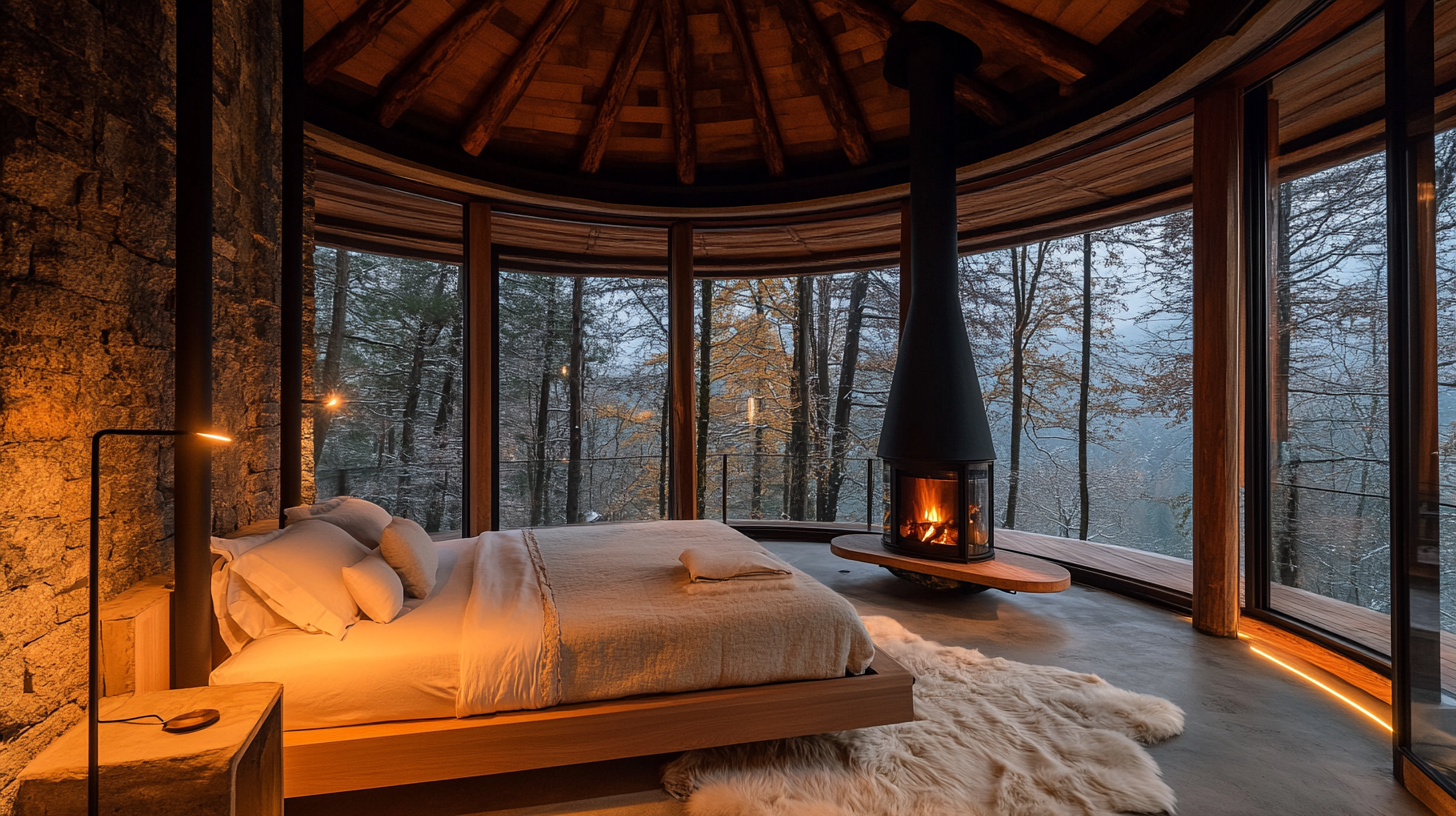
01
The Living Space
The forest is inside the room. The glass wall saw to that.
Floor-to-ceiling glazing dissolves the boundary between interior and canopy. The wood stove — blackened steel, sculptural — anchors the center of the room. A low linen sofa faces the glass. Behind it, a Hutsul carved walnut panel: interlocking eight-pointed stars, the master carver's signature geometry. Polished concrete underfoot, warm from the radiant heat below. You take your shoes off and never put them back on.
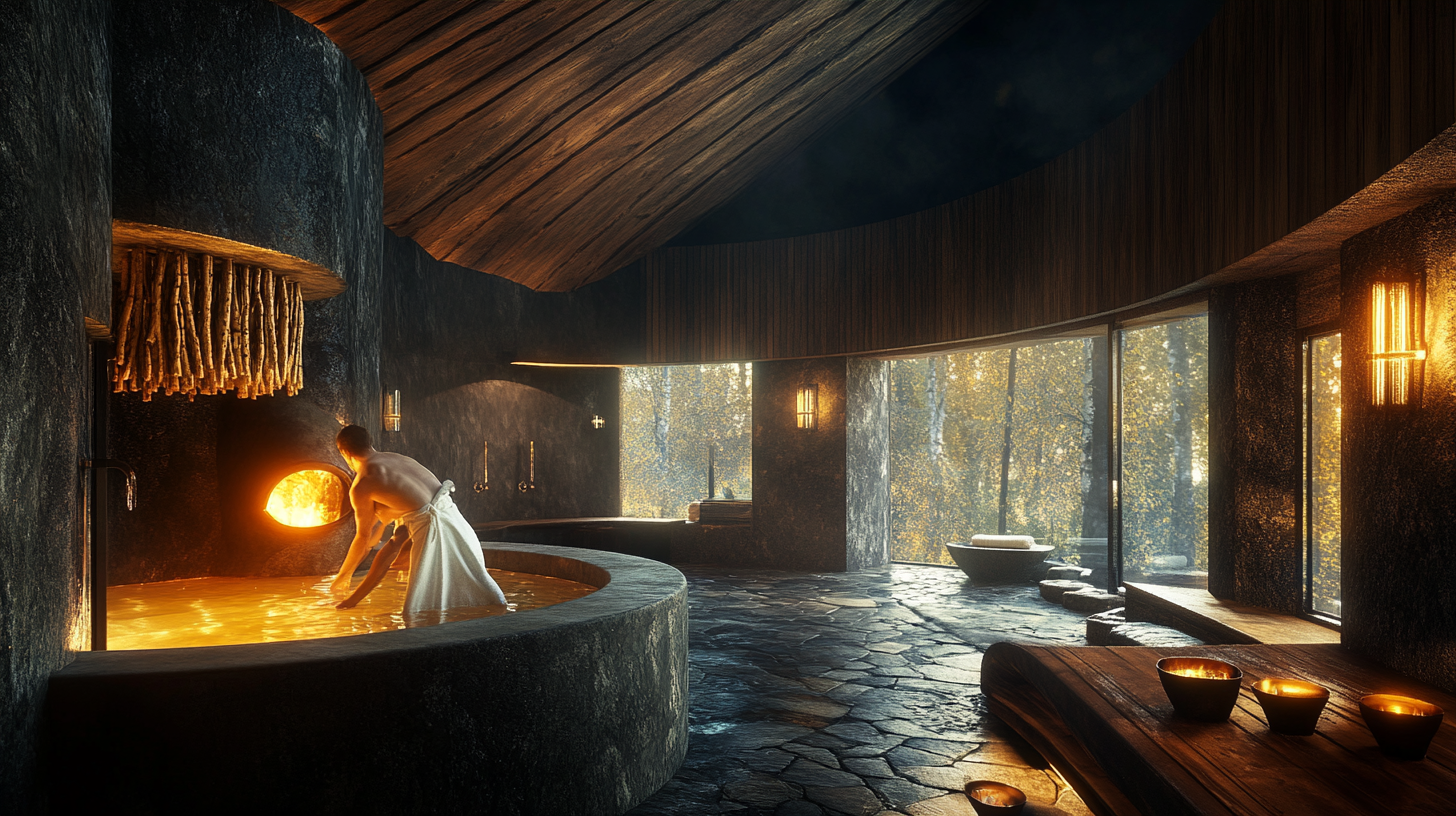
02
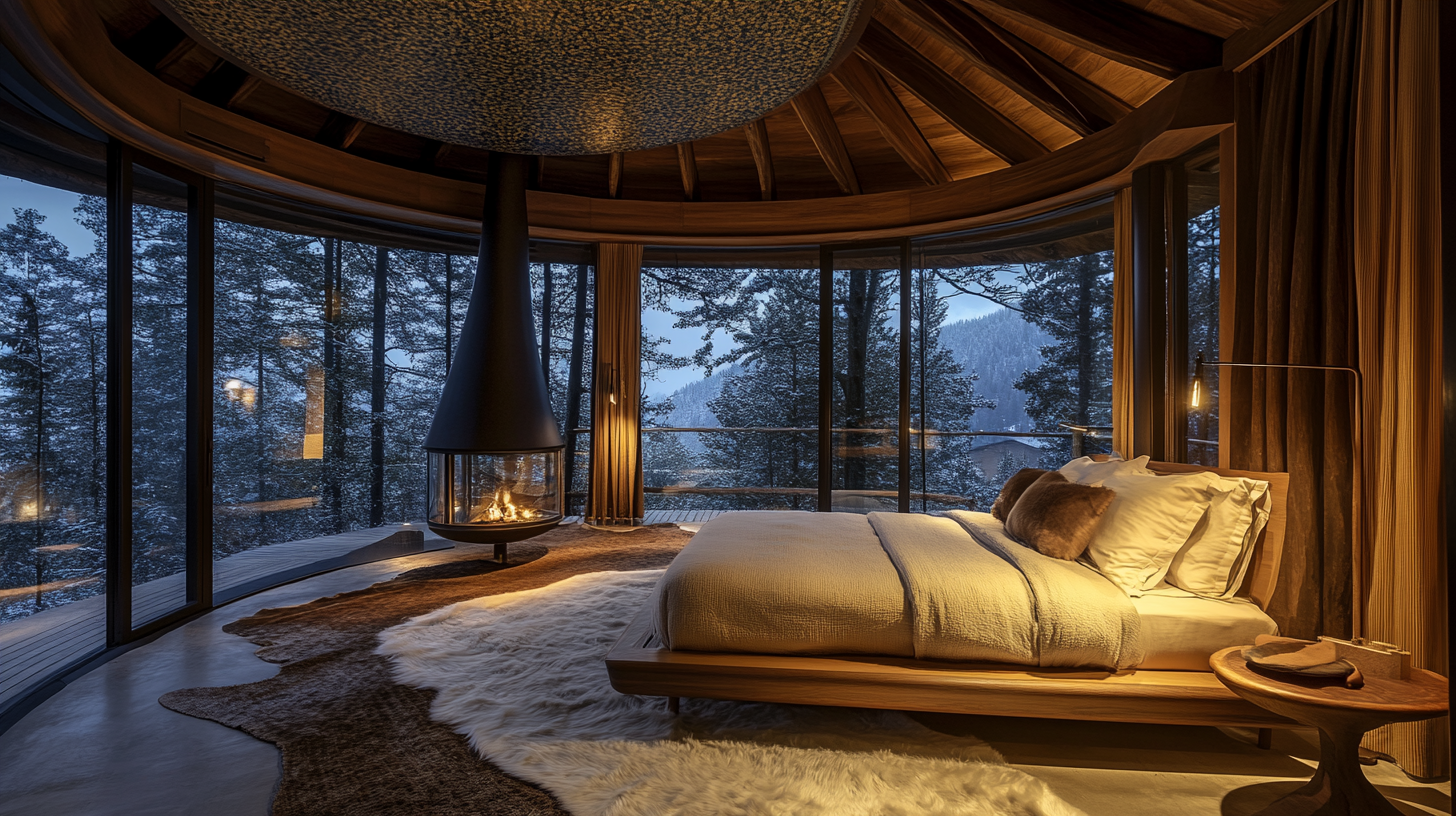
The Bedroom
Morning light across white linen. The forest waking up outside.
The carved walnut headboard is the first thing you see — a six-century-old geometric language rendered by hands that have been carving since childhood. Eight-pointed stars, intertwining vines, carved rosettes that catch the light differently as the sun moves. Hand-loomed linen bedding, raw-edge, softened by years of washing. A Hutsul wool blanket at the foot of the bed. You wake up to the forest, every morning, without an alarm.
03
The Loft
The nest under the peak. Skylights to the canopy.
The steep A-frame geometry creates a cocoon at the top of the structure — the ceiling slopes down to meet you, the skylights open directly to the tree canopy above. At night, you see stars through the glass. In the morning, the green light filters through leaves first, then reaches you. This is where children sleep. Or where you sleep when you want to feel held by the architecture itself.
04
The Bath
The forest watches you bathe. You don't mind.
A freestanding soaking tub positioned at the glass wall — the forest is your only company. Tadelakt walls, hand-polished to a warm, waterproof sheen. Copper fittings, hand-forged, that develop a living patina. The herbal bath ritual: dried lavender, chamomile, and yarrow from the estate apothecary, steeped in mineral spring water. The water arrives iron-rich, faintly warm from the earth. No plastic bottles. No synthetic anything.
05
The Kitchen
Morning coffee. Forest light. The table set for two.
A live-edge walnut table that seats two — or four, if you pull it from the wall. Artisan ceramics in matte earth tones. Copper cookware that rings when you tap it. The morning light enters from the east and lands on the table first. Coffee is ground by hand. Bread arrives from the estate bakery before you wake. Mineral spring water runs from the copper tap. Everything here was made by someone who cared about it.
06
The Deck
Dinner for two. The creek below. Fireflies at dusk.
The deck extends over the creek — you hear the water directly below, feel the mist on warm evenings. Two chairs. A low table. Copper lanterns that throw amber light across the weathered timber. This is where you eat dinner when the evening is warm enough, which is most evenings from May through October. The fireflies arrive at dusk without being asked. The creek sounds different at night — lower, closer, more intimate.
Amenities
Everything present. Nothing unnecessary.
The Evening
When the sun goes down
The stove is lit. The beeswax candles are lit. The glass wall becomes a mirror — reflecting the warm amber interior back at you while outside the forest darkens and the first fireflies appear, hesitant, testing the dusk. Inside is warm. Outside is alive. You are exactly between.
Dinner arrives on a handwritten card slipped beneath the door. You chose the wine earlier. It appears on the deck without knocking — two glasses, a copper carafe, the bottle open and breathing. The creek makes its night sound now. Lower. Closer. More intimate than the daytime version. You eat on the deck in copper lantern light, barefoot on the warm timber, and you do not check the time once.
Later — you won’t remember when — you move inside. The stove has found its rhythm. The linen is cool when you first lie down and warm within minutes. The carved headboard catches the last candlelight, the rosettes throwing tiny shadows that move as the flame moves. The creek is the only sound. It has been here for ten thousand years, doing exactly this.
The most romantic evening doesn’t require a reservation.
It requires a cabin, a creek, and the absence
of everything that isn’t this.
Founding Stays
From $650 / night
Twelve cabins. Each beside its own stretch of creek.
Founding rates — up to 50% off.
The deepest discount we will ever offer.
Fully refundable · No questions
Reserve a Founding Stay⟶131 founding members have already claimed their place.