
the mission
the water does not care what you believe.
it rises through four hundred million years of stone, carrying iron and lithium and the memory of a world before names. the Lenape bathed in it. the Shawnee held council beside it. ten American presidents traveled to these ridgelines for what the water did to them, and the water did not notice.
this is a place where something ancient is being built by hand. where a monastery will shelter women who have nowhere else to go. where artisans from the Carpathian mountains are crossing an ocean to preserve six centuries of craft on land that remembers them — because the mountains here and the mountains there were once the same mountain, and the water on both sides still carries the same mineral signature, the same silence, the same iron-dark knowing.
everything else — the cabins, the spa, the dining — exists to fund this.
a monastery
for this century
Paraskeva was born in the eleventh century. At ten years old she heard the Gospel read aloud and something changed in her that never changed back. She began giving everything she had to the poor — not the old things, the good ones. Her parents tried to stop her. She gave things away faster than they could replace them.
She walked away from her family's wealth. She spent the rest of her short life in prayer and service.
She died at twenty-seven.
For a thousand years after, churches have risen in her name across the Carpathian world. She is the protector of women, the sick, and the poor. She is the patron saint of the mountains.
The Paraskeva House carries her name because it carries her conviction:
the only life worth living is a life poured out.
Not hoarded. Not optimized. Given.
That is the entire mission. Everything else follows from it.
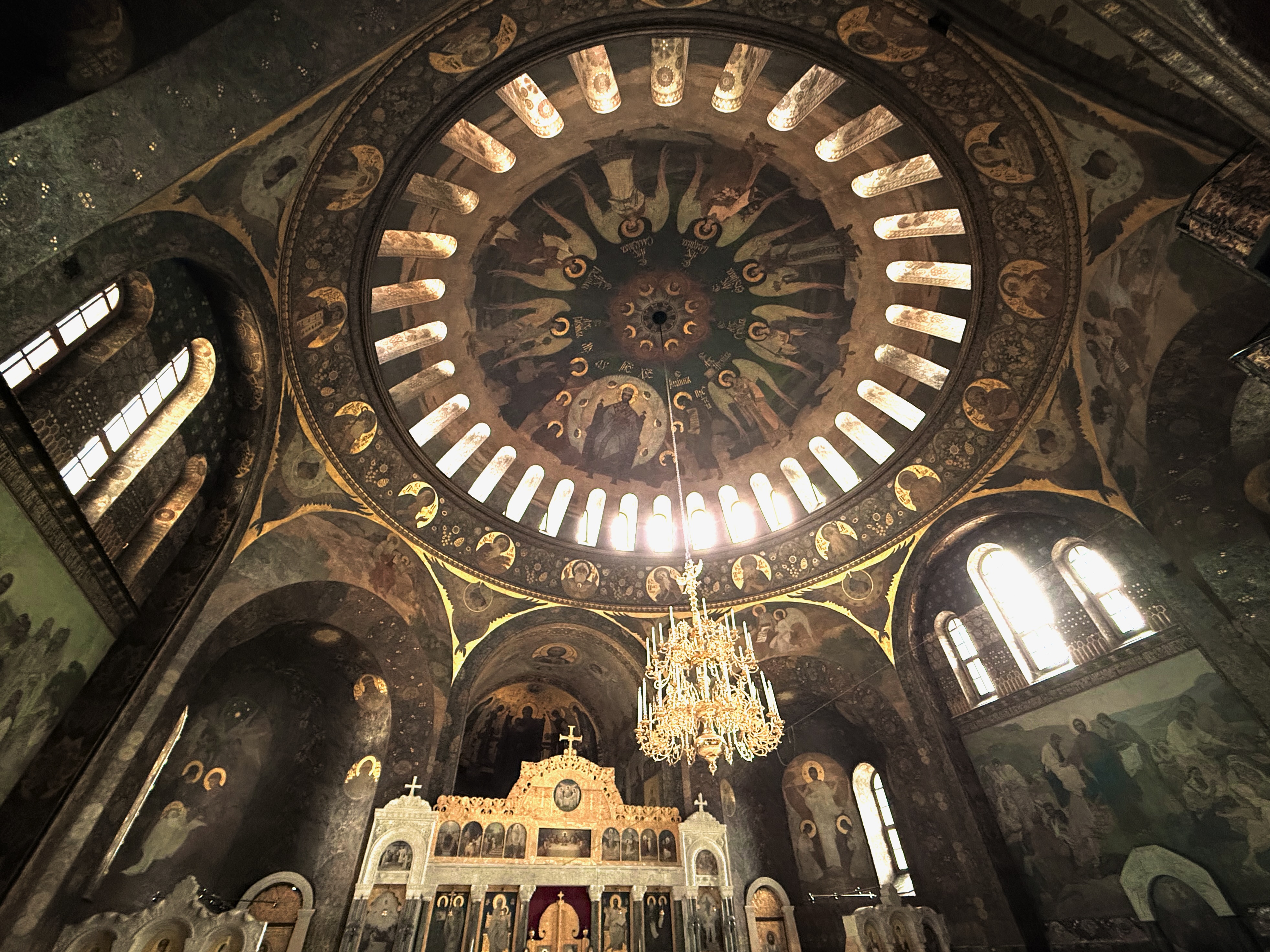
The Paraskeva House is a working women's monastery on the Carpathique property — staffed by those who have given their lives to prayer and handcraft and the quiet, unspectacular work of being present for another human being.
What it provides is concrete: housing, meals, counseling, vocational training, and — critically — time. Time to heal without being asked to perform recovery on someone else's schedule. Time without a clock or a case manager or an intake form demanding to know your plan. The plan, for as long as it needs to be, is rest.
The vocational work is real. Women learn alongside the people who run the sanctuary — the farm, the kitchen, the grounds. These are not make-work programs. They are positions with wages at a place that treats its workers like family. A woman who leaves the Paraskeva House leaves with skills, references, and the knowledge that someone believed she was worth the investment before she believed it herself.
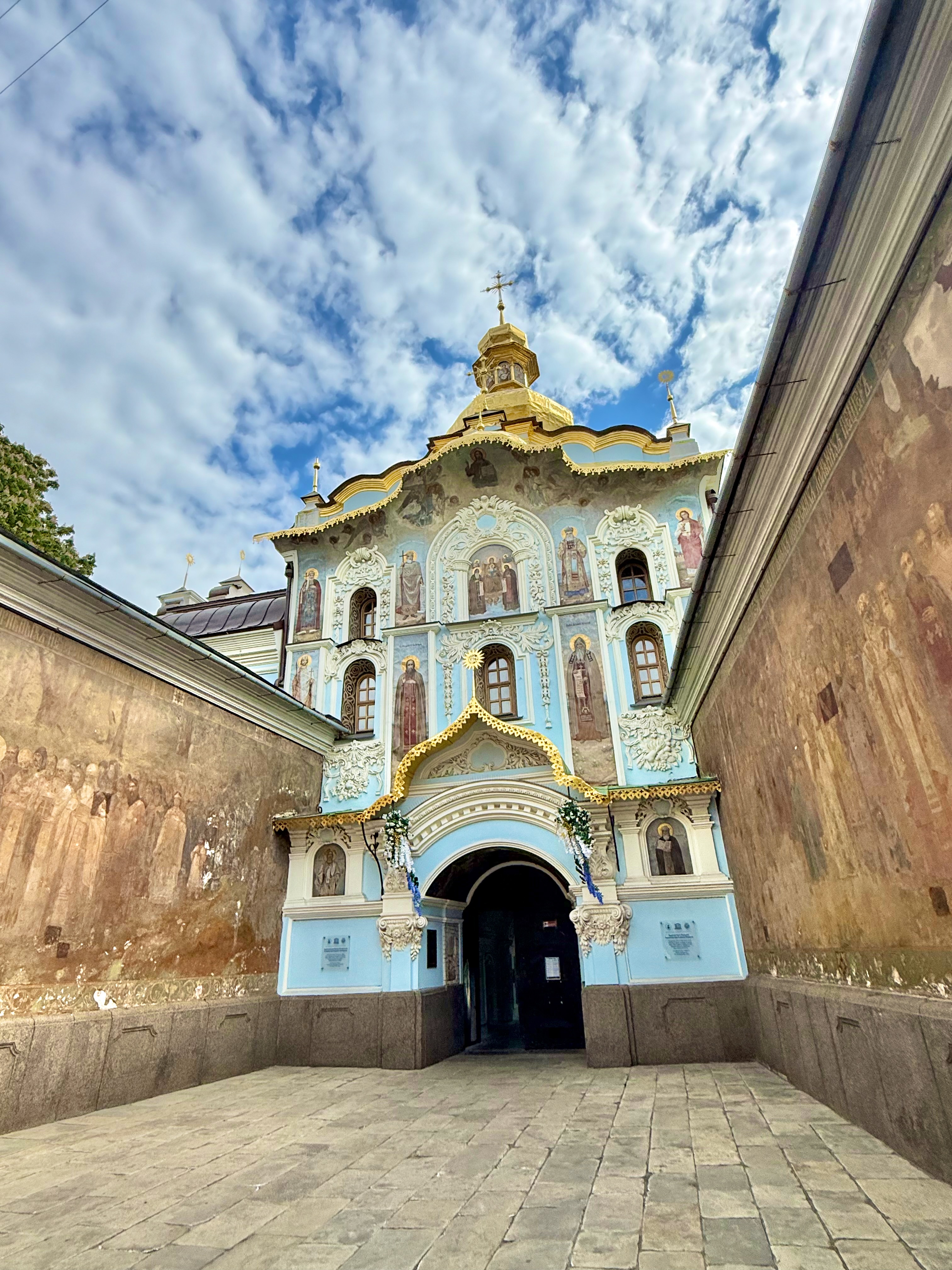
The daily rhythm holds it all together — morning prayer, shared meals, work, evening quiet. Not a program. A structure that holds people who have lost all structure.
A woman who has been praying the same office for thirty years carries a quality of attention that is almost impossible to find in the modern world. That attention is itself healing. It does not need to be packaged. It is just there — the way the spring water is there.
The doors are open to everyone.
The tradition is ancient.
The welcome is unconditional.
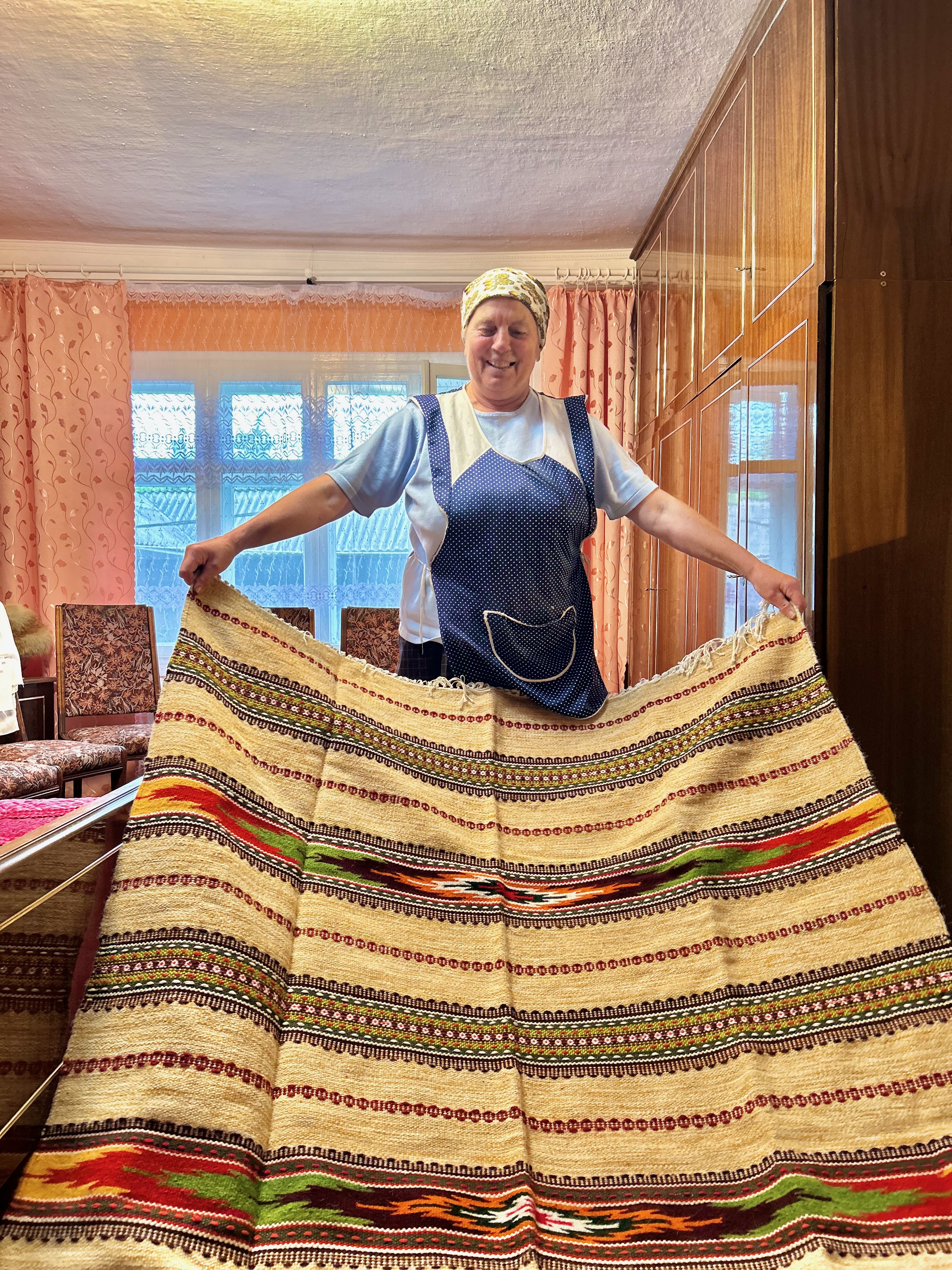 Carpathian highlands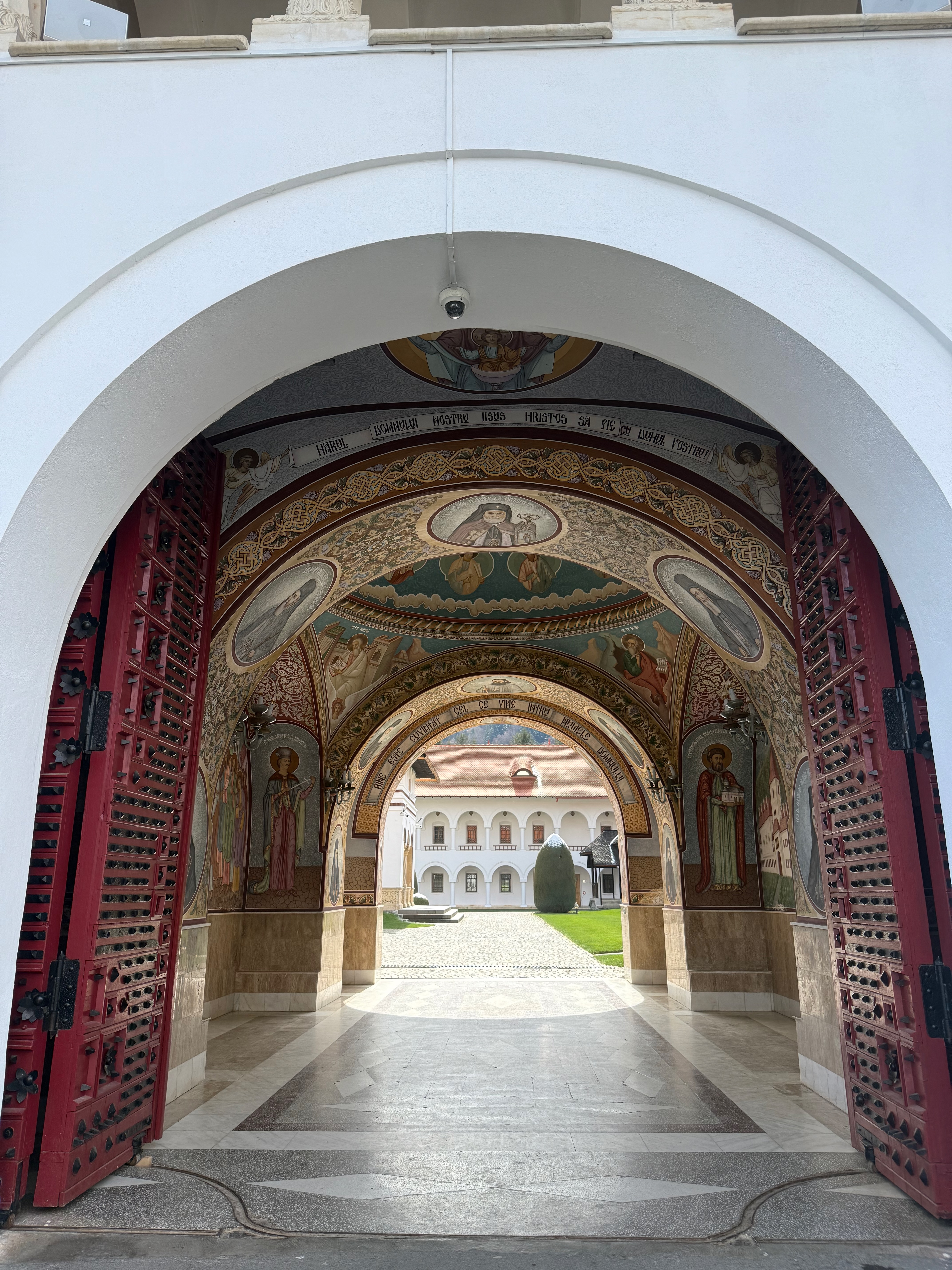
built by hand.
open to all.
The Church of the Pokrova — the Protection of the Mother of God — will stand at the heart of the property. Pokrova is one of the most beloved feasts in the tradition of these mountains: the feast of shelter. The feast that says no one who comes seeking refuge will be turned away. There is no better name for what this place will be.
The church will be built entirely by hand using traditional Carpathian timber construction — the same joinery as the cabins, applied to sacred architecture. Mortise and tenon. No nails. Each joint fitted by hand, each timber selected from the surrounding forest. A wooden dome rising above the treeline the way they have risen in the Carpathian highlands for five hundred years — modest in scale, extraordinary in craft, and tuned to something the body recognizes before the mind can name it.
This will not be a chapel for guests. It will be a living, breathing house of worship — open to the women of the Paraskeva House, to visitors, to the local community, and to anyone who walks through the door. The services follow the ancient rite. The invitation belongs to everyone.
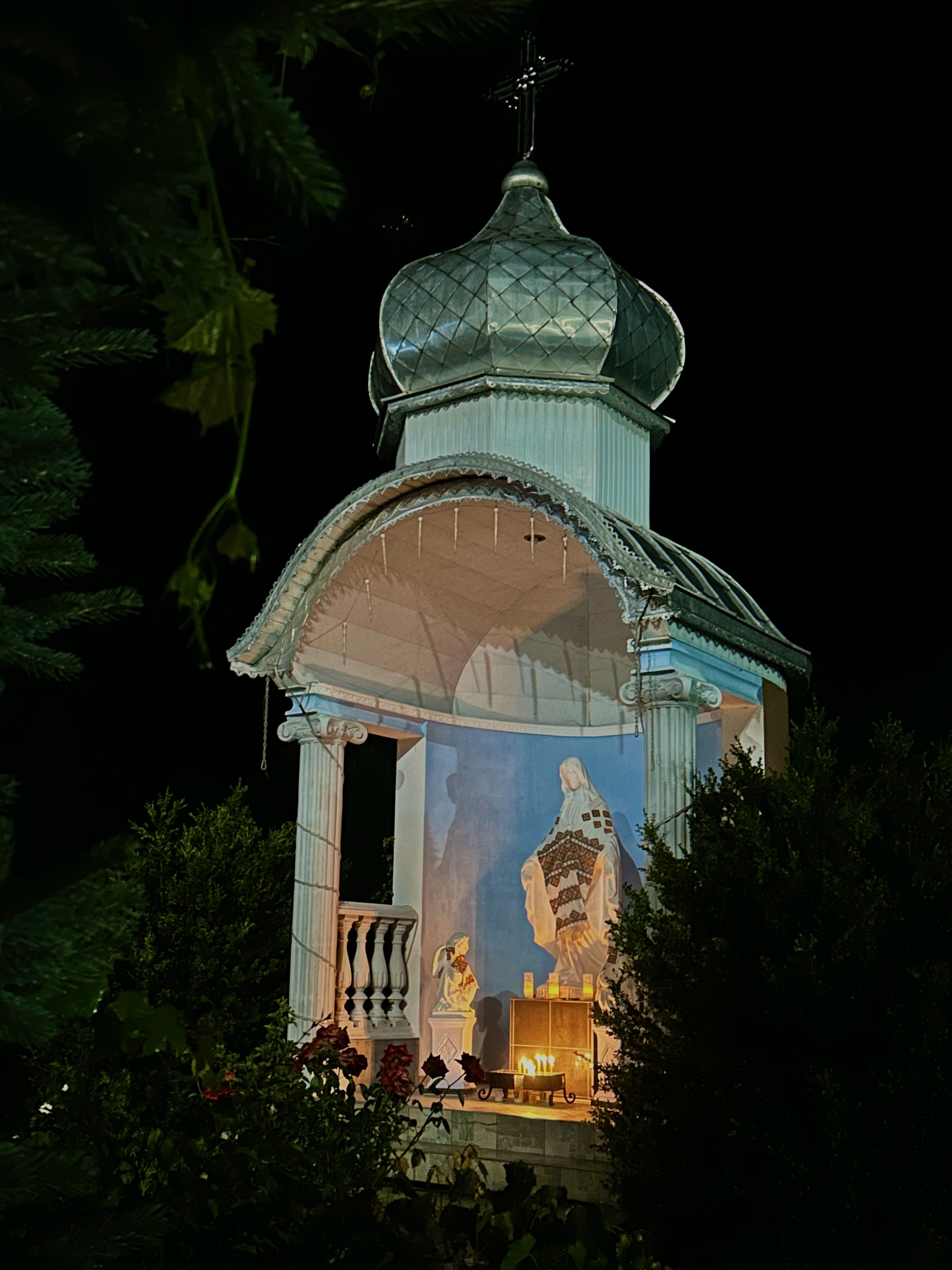
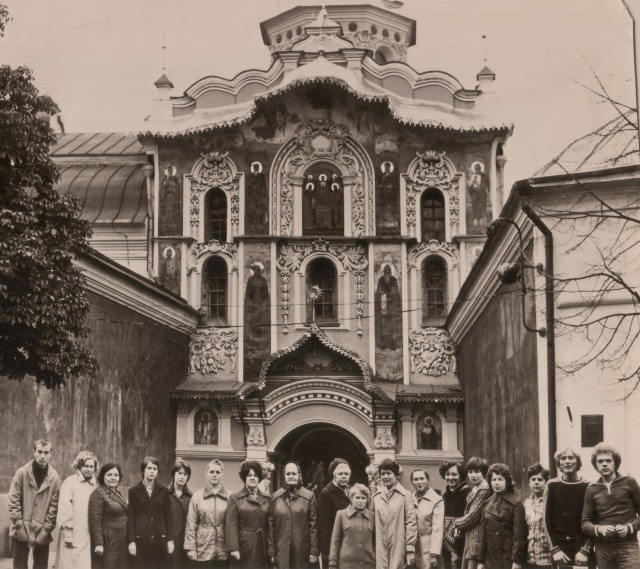
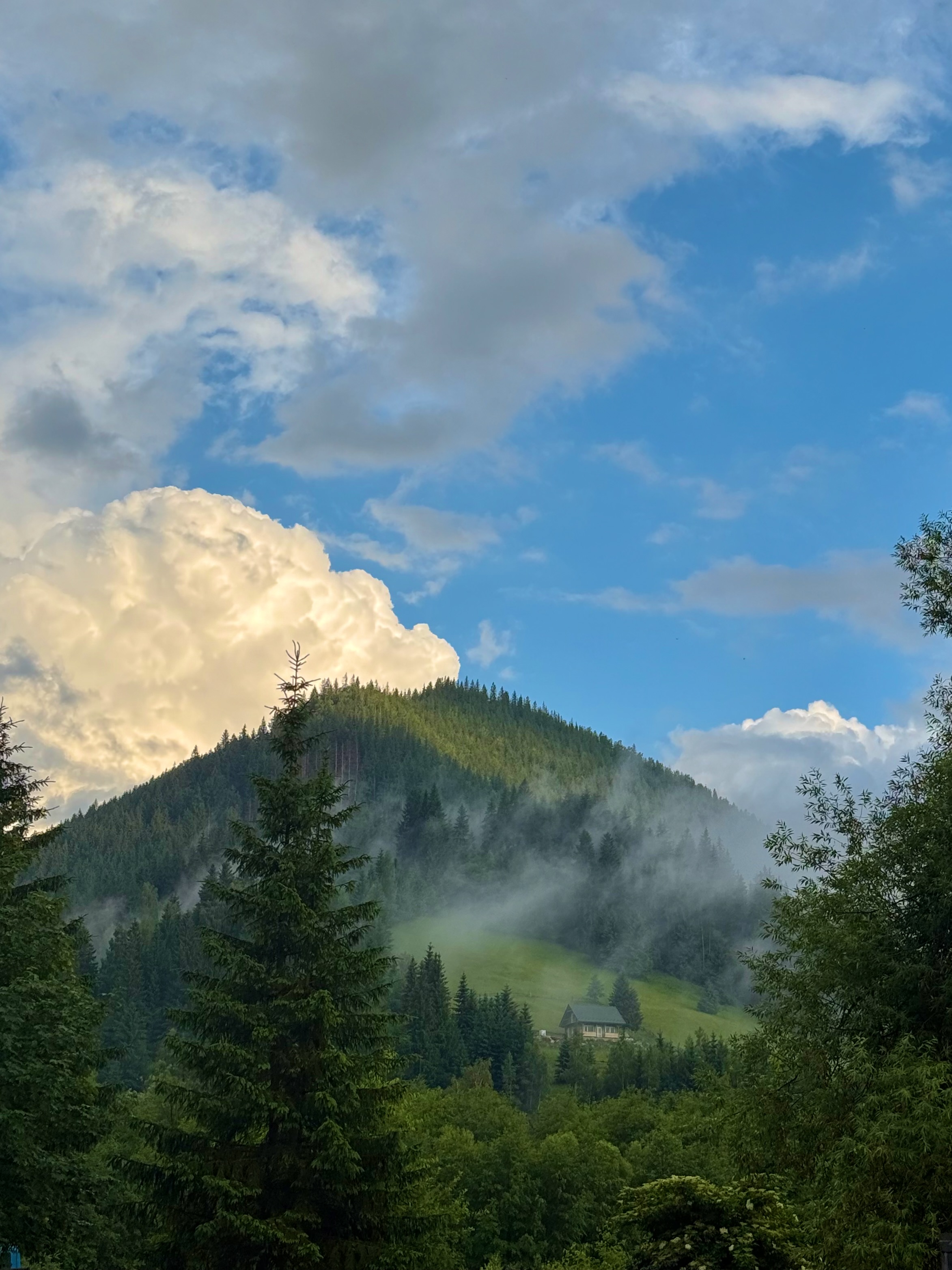
she died at twenty-seven. for a thousand years after, churches have risen in her name.
when you reserve a stay at carpathique,
you are not booking a room.
you are building a home
for someone who has never had one.
what your stay
builds
A portion of every reservation funds the Paraskeva Mission directly. This is not a 'give-back program' or a footnote about proceeds. The mission is the reason Carpathique exists. The hospitality is how we pay for it.
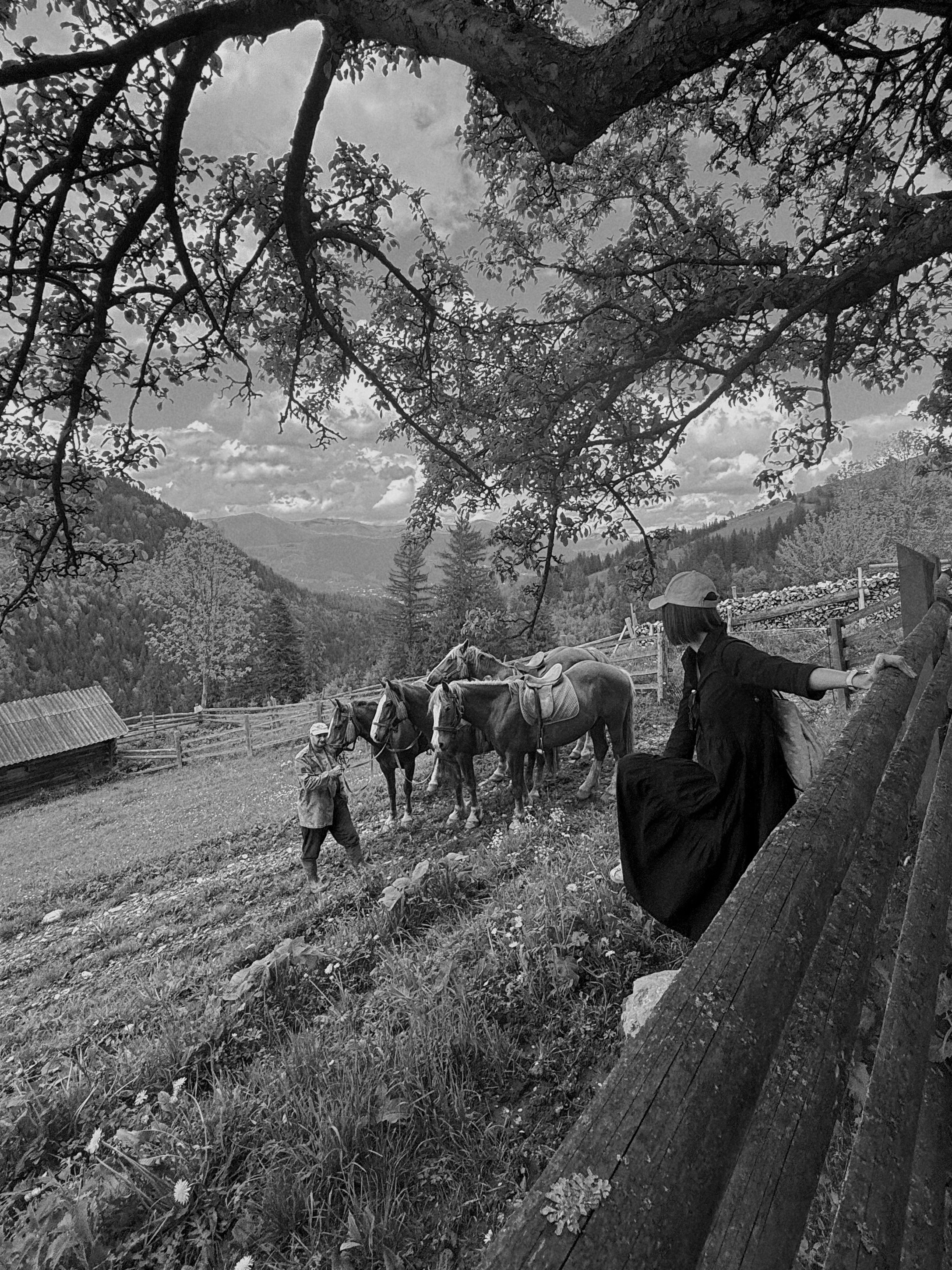
from vision
to sanctuary
awakening
Development begins on Whiskey Run. First structures take shape. The farm prepares for its first guests. The first artisans arrive from the Carpathians. Timber is selected from the forest by hand, each log walked and read before it is felled.
first light
Carpathique opens its doors to founding guests. A-frame cabins, treehouse suites, and the wellness spa welcome their first visitors. The communal table serves its first meal. The fire is lit for the first time in the main hall, and it does not go out.
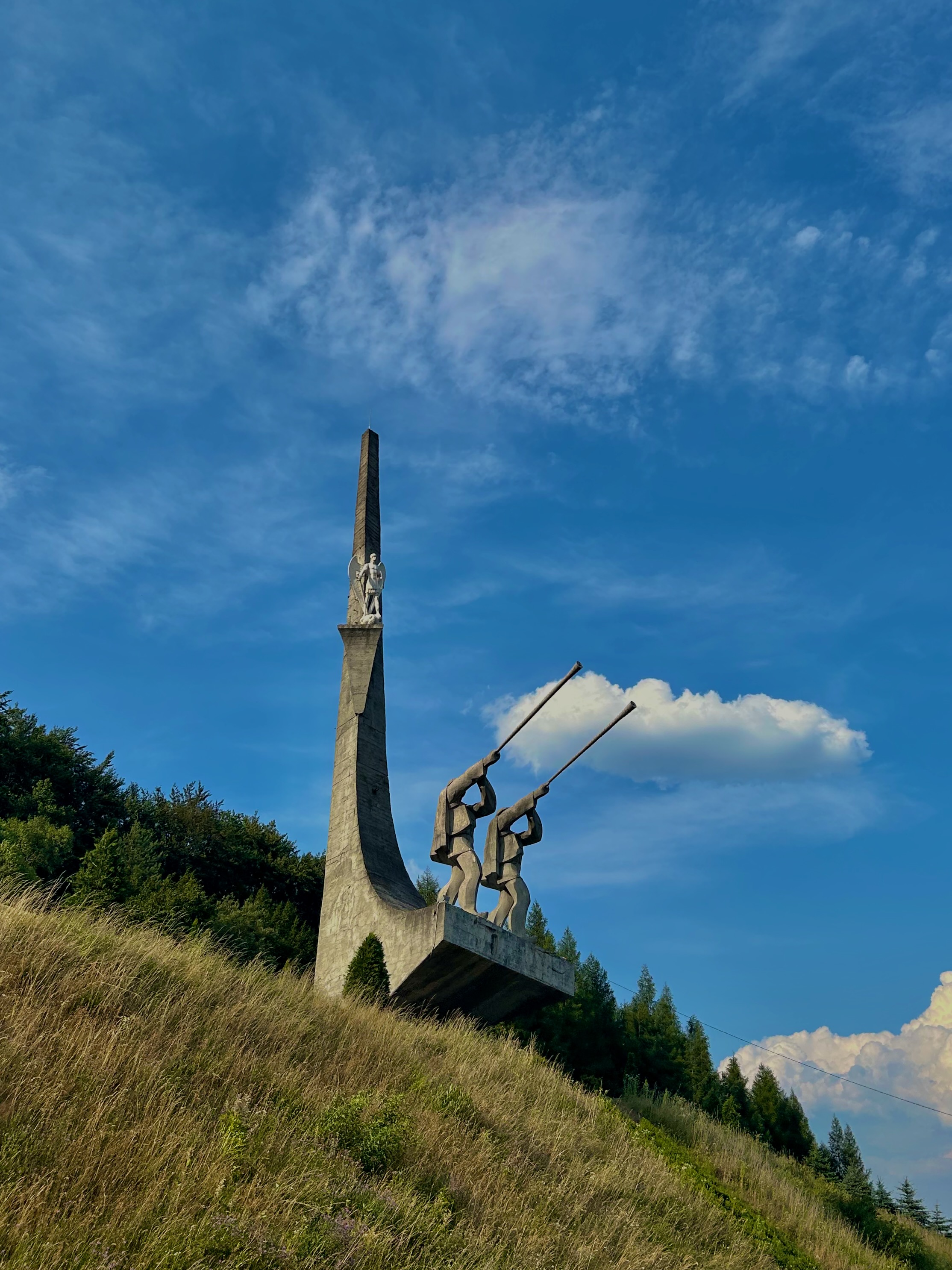 rendering · church of the pokrova
the church rises
Construction begins on the Church of the Pokrova and the Paraskeva House. Elevated walkways extend the sanctuary deeper into the forest. Women arrive at the Paraskeva House for the first time — and the mission that started this whole thing becomes visible in the world.
full sanctuary
All phases complete. Carpathique operates as a fully realized sanctuary — working farm, wellness center, place of worship, and home. The creek still runs. The trees are taller than when this began. Some of the founding guests return, and the place knows them.
not inspired by a place.
born from one.
other resorts reference culture from a distance.
carpathique is designed, built, and operated by the culture itself — by Ukrainian, Romanian, and Slovak artisans whose families have shaped these mountains for centuries.
other wellness retreats offer borrowed rituals.
ours come from a living tradition — Carpathian phytotherapy, herbal steam, mineral immersion — practiced in these highlands since before written record.
other projects ask you to be a guest.
we ask you to become a founding patron of something that will outlast all of us — a sanctuary, a place of worship, and a home for those the world forgot to love.
other hospitality brands donate a percentage of proceeds to charity.
carpathique exists to fund a monastery, a church, and a mission to shelter women. the hospitality is how we pay for it. the love is why.
become part
of this
the mountains are already here.
the springs are already running.
the only thing missing is the door
the world can walk through.
we are building it now.
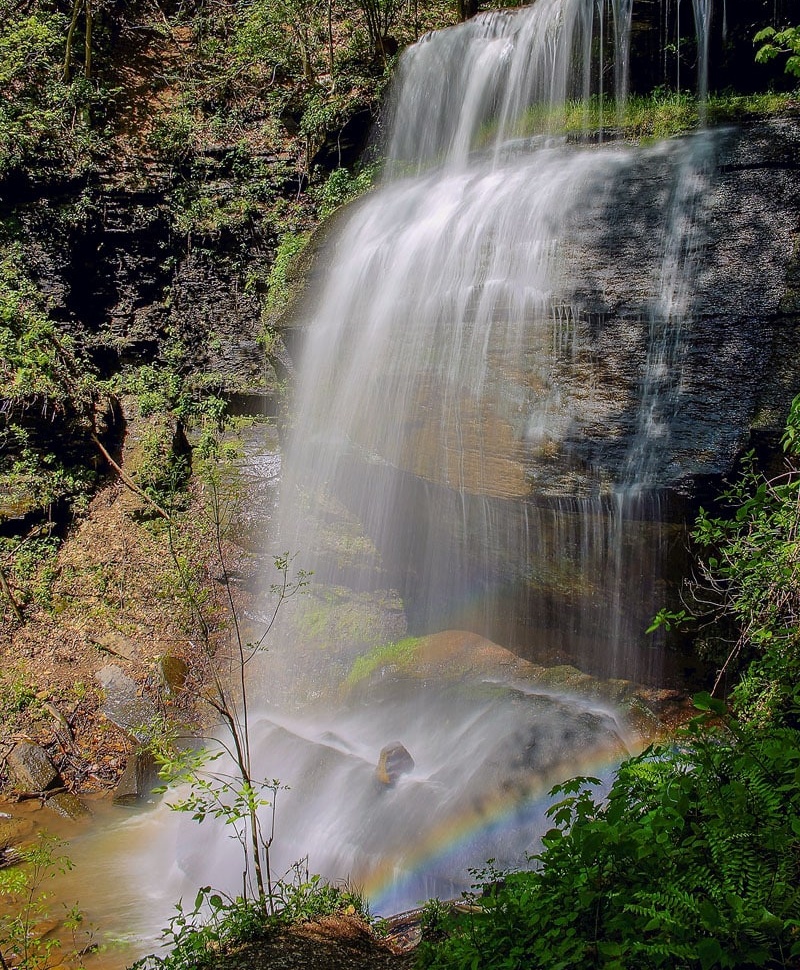 40.604857° N · 79.403054° W