
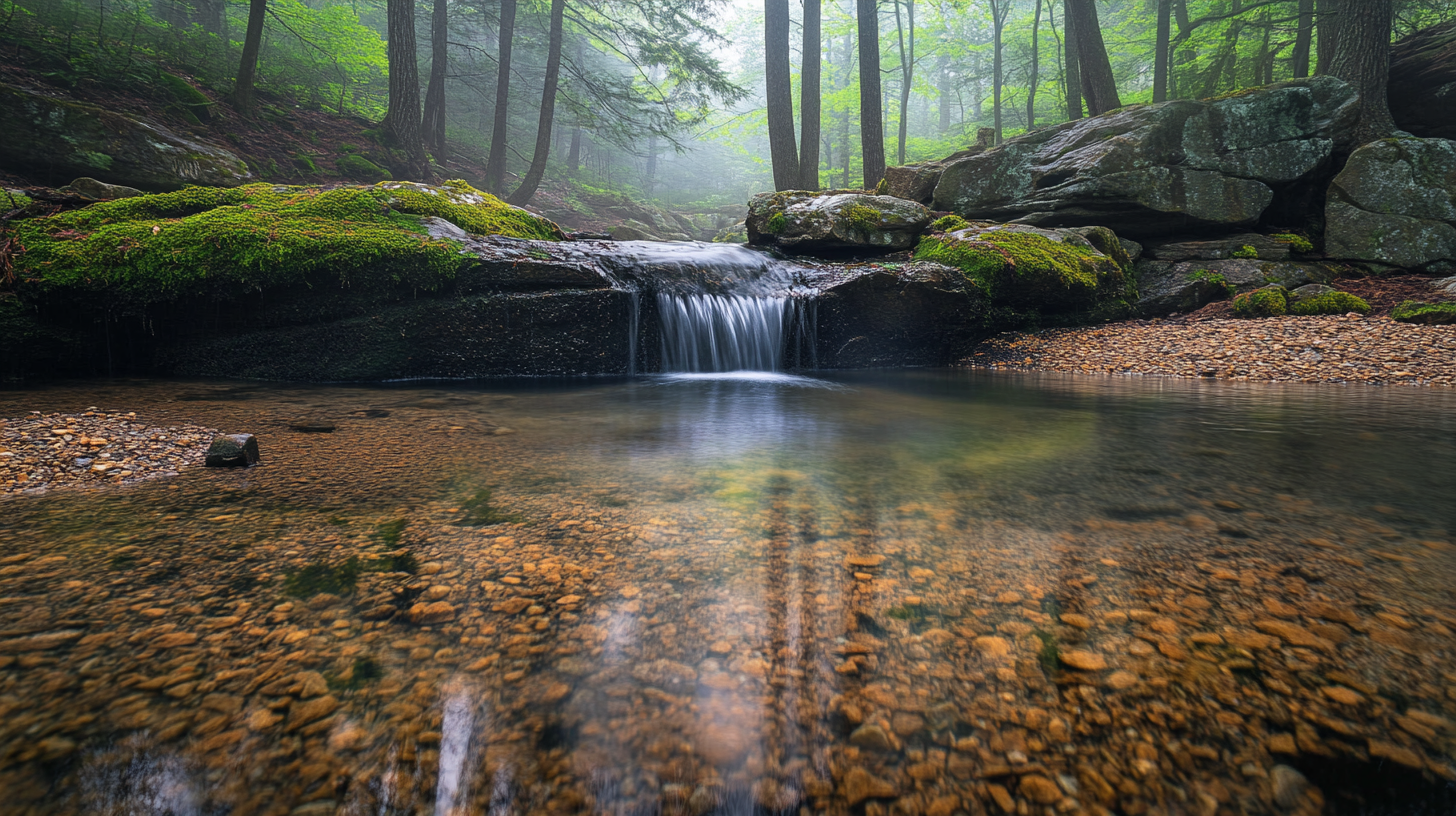
Mineral springs have flowed through these highlands since before human memory
“The extraordinary cures effected during the last summer are beginning to excite very general attention.”
Long before there was a name for this land, the Tuscarora, Iroquois, and Shawnee traveled from the Eastern Seaboard to bathe in these springs. They called them medicine waters. They held powwows around them in peace — even rival nations laid down arms in the presence of the springs. When European settlers arrived, they found the same thing the tribes had known for centuries: the water healed what the world had broken.
George Washington journeyed to western Pennsylvania's mineral springs before there was a hotel or a road to reach them. Thomas Jefferson followed in 1819, staying for weeks to ease his rheumatism. In all, ten U.S. presidents would seek out these waters — James Buchanan made the nearby Bedford Springs his Summer White House. For two centuries, the most powerful people in the country came to this corridor of Pennsylvania for one reason: the water.
The water that surfaces on our property is cold, iron-rich, and crystalline — carrying the same mineral composition found in Europe's most celebrated thermal springs.
Mineral Composition · mg/L
Preliminary field analysis — full lab certification in progress
Evian: undetectable
circulation · inflammation · oxygen transport
Evian: 26 mg/L
muscle recovery · stress relief · 300+ enzymatic reactions
Evian: 80 mg/L
bone density · nerve function · heart rhythm
most waters: undetectable
mood regulation · neuroprotection · longevity
Evian: 15 mg/L
skin elasticity · collagen synthesis · hair strength
Total Dissolved Solids
1,680 mg/L
Evian: 357 · Fiji: 210 · Tap water: ~50 mg/L
Mineral values based on preliminary field sampling. Full independent lab analysis to be published prior to opening.
The most sophisticated wellness technology on earth is 2,000 years old.
Across Eastern Europe, generations have healed themselves with nothing more than heat, cold water, and time. No devices. No subscriptions. No optimization stacks. The Carpathian banya ritual is the original biohack — and most Americans have never experienced it.
“What the gym does for your body in an hour, the banya does for your body and soul in an afternoon.”
01
The Banya
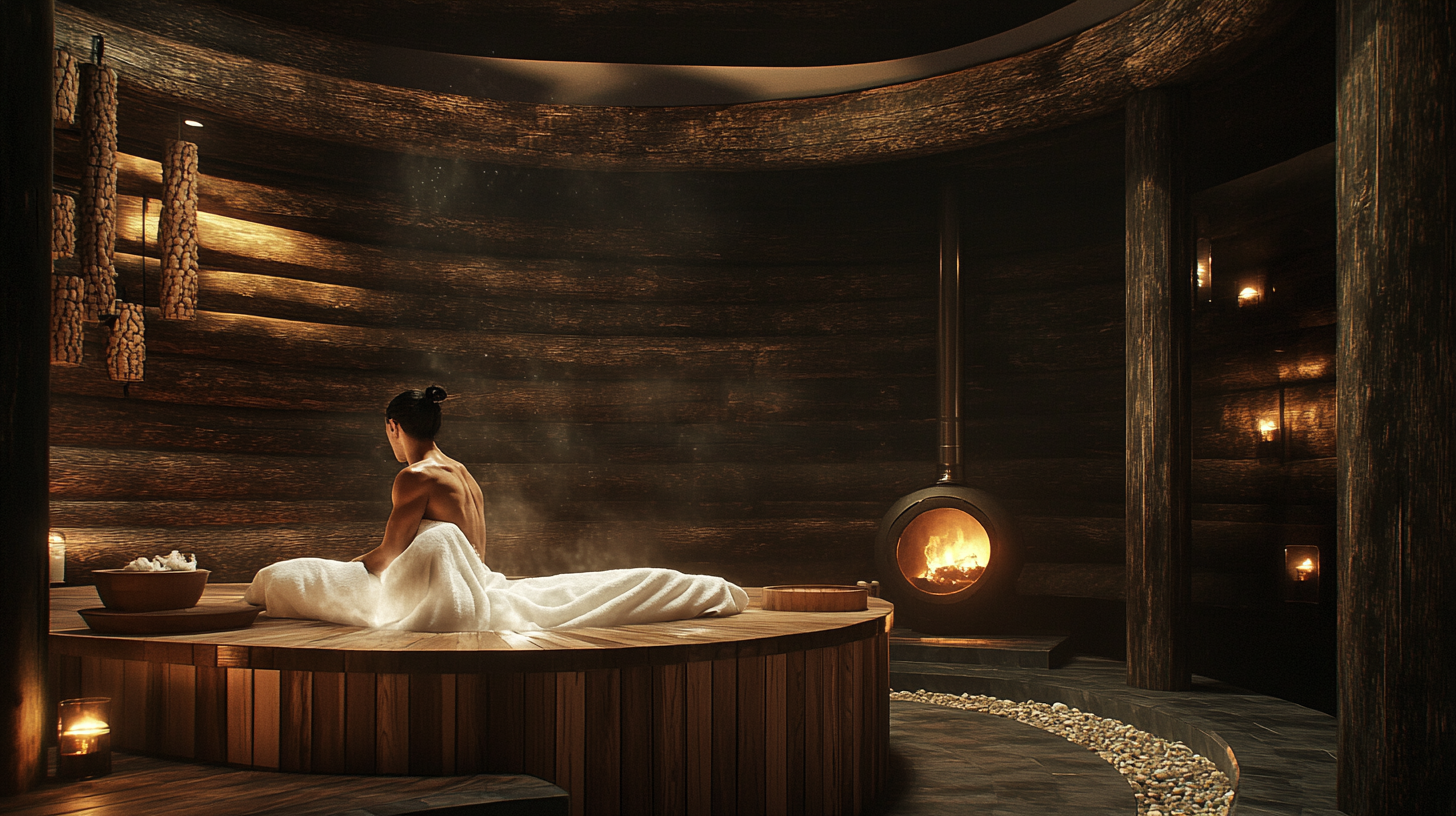
180°F · Steam Heat · 15–20 min rounds
This is not a sauna. This is something older, wilder, and more alive.
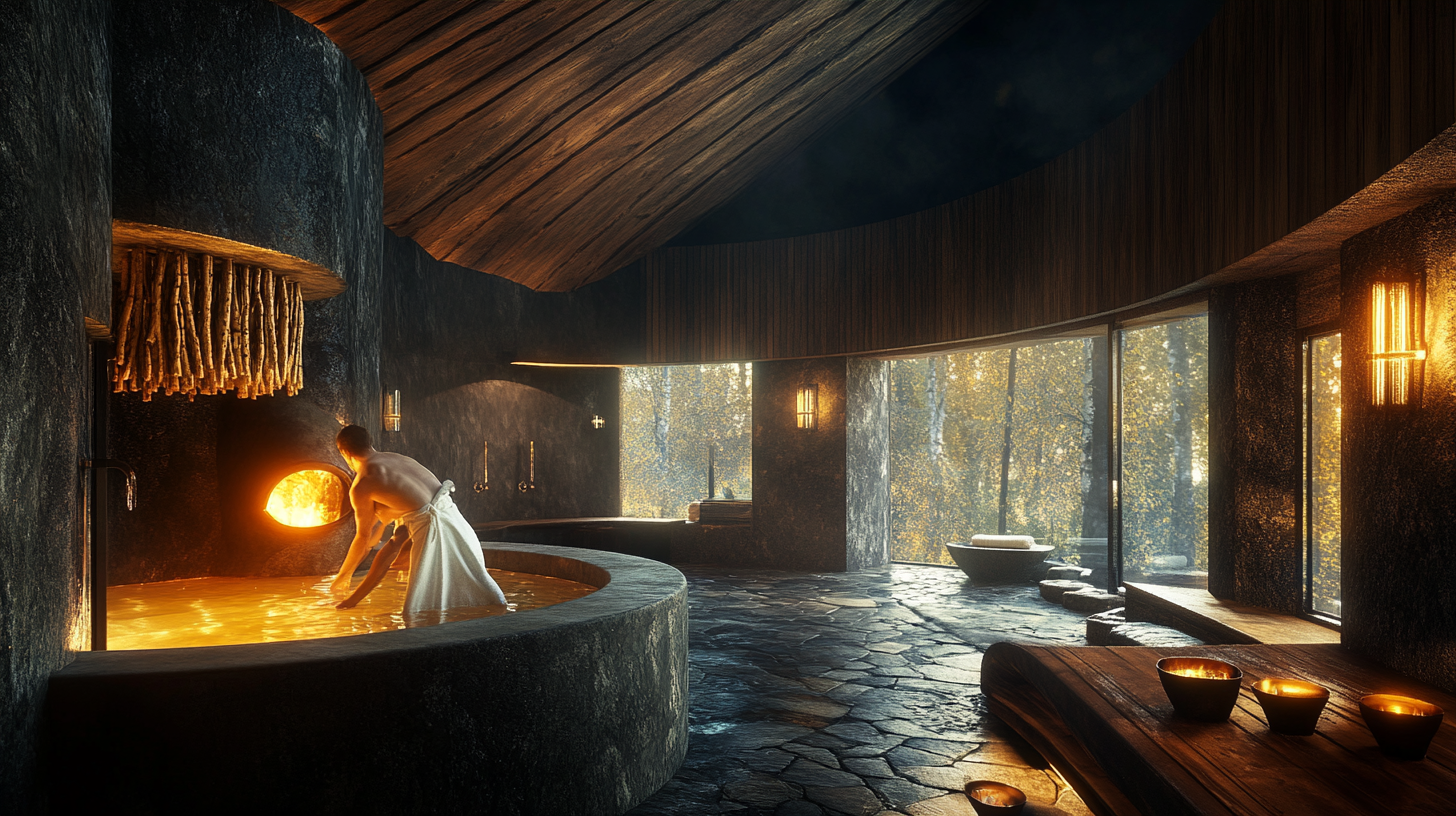
The Carpathian banya is a wood-fired steam chamber — rougher and more primal than the Finnish sauna, more intentional than any spa you've visited. Temperature climbs above 180°F. A banya master pours infusions of birch, eucalyptus, and pine over iron stones, filling the room with steam that opens every pore you have.
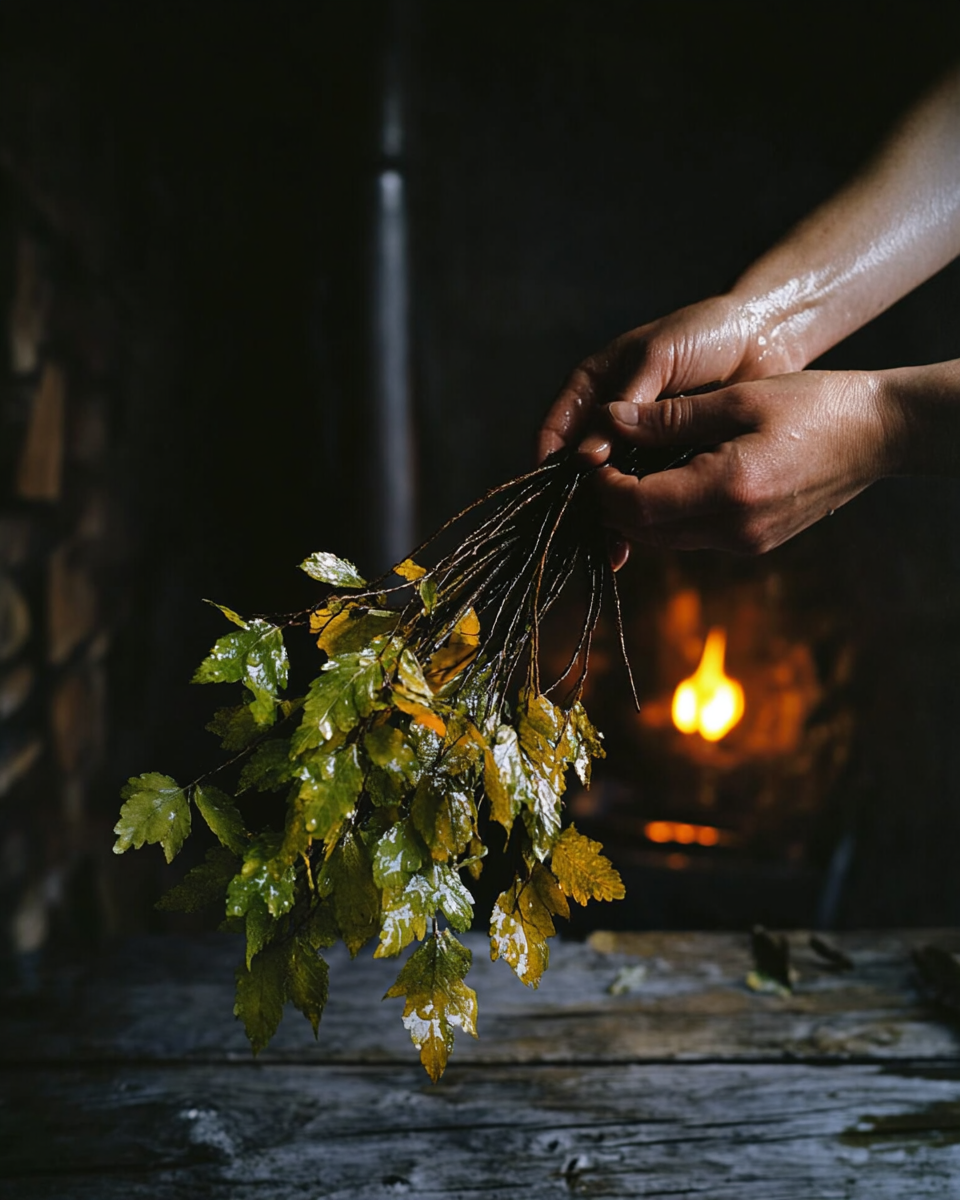
Then comes the venik — a bundle of fresh birch, oak, or eucalyptus branches. The master works it rhythmically across your back, shoulders, and legs. It's part massage, part percussion, part ancient ritual. The leaves draw blood to the surface. The oils release into your skin. Your body begins to do something it almost never does in modern life: fully let go.
A single banya session drives deep muscle relaxation, accelerates lymphatic drainage, clears your sinuses, and produces a runner's high without running a mile.
02
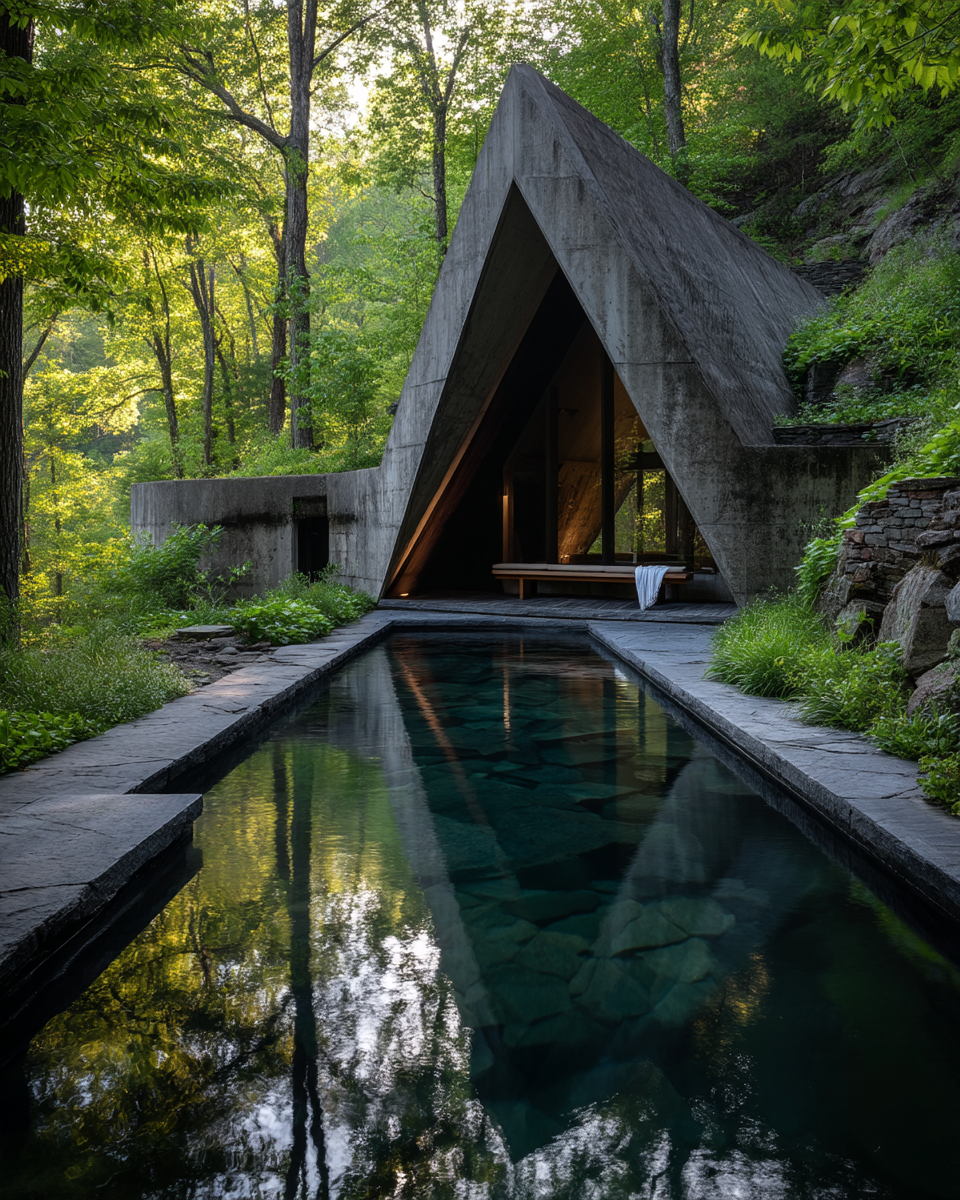
The Cold Plunge
52°F · Iron-Rich Spring Water · 1–3 min
The banya brings you to the edge. The plunge brings you back — and the person who surfaces is not the one who went in.
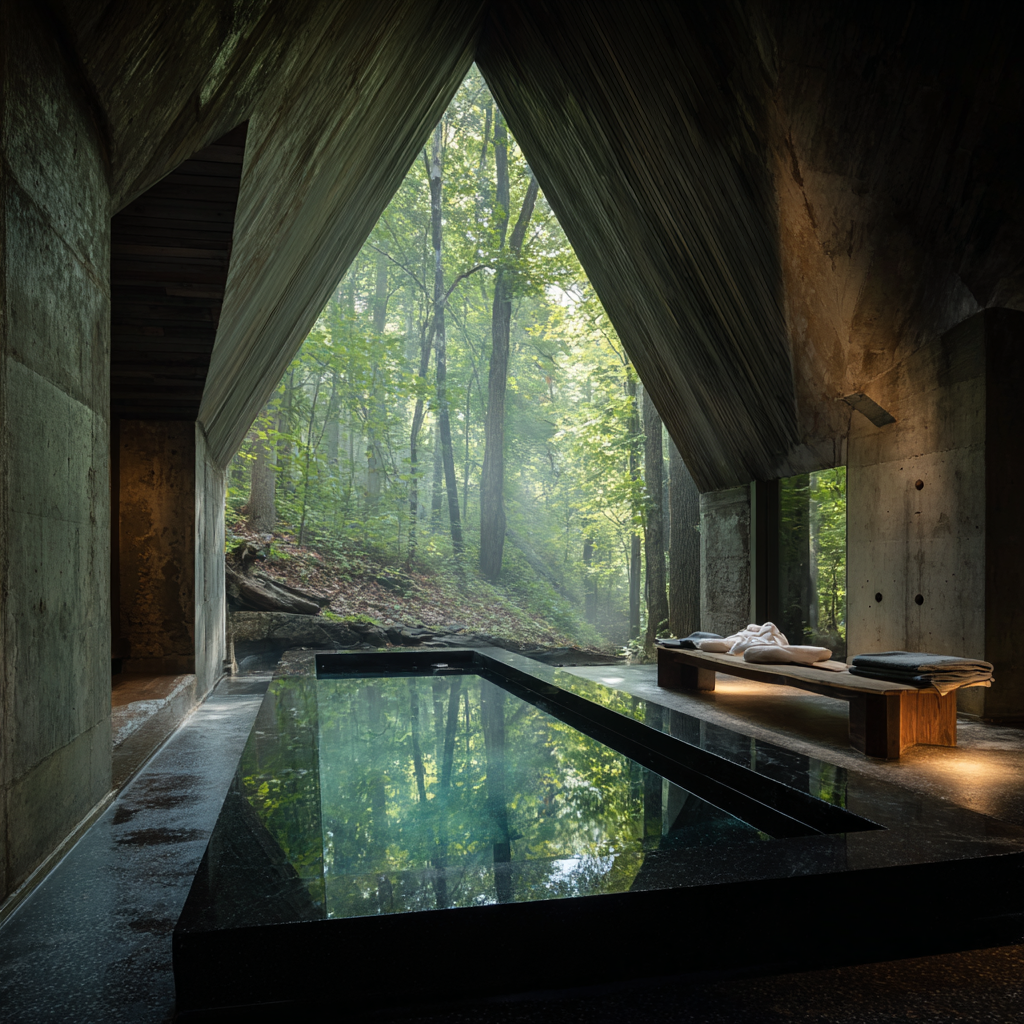
Immediately after the banya, you walk outside into the dawn air and step into 52°F mineral spring water fed directly from Whiskey Run's iron-rich aquifer. Your nervous system fires. Your heart rate drops. Every cell in your body snaps to attention.
This is not punishment. This is the point. The contrast between extreme heat and extreme cold is what makes the Carpathian ritual so transformative. Blood that was pulled to the surface rushes back to your core, carrying waste products with it. Norepinephrine spikes 300%. Inflammation clears. The mental fog you arrived with — simply gone.
In the Carpathian tradition, the cold is not something to endure. It is something to receive. After three minutes, most people never want to get out.
03
The Rest
Room Temp · Unhurried · As Long As Needed
This is the step Americans always want to skip. It is the most important one.
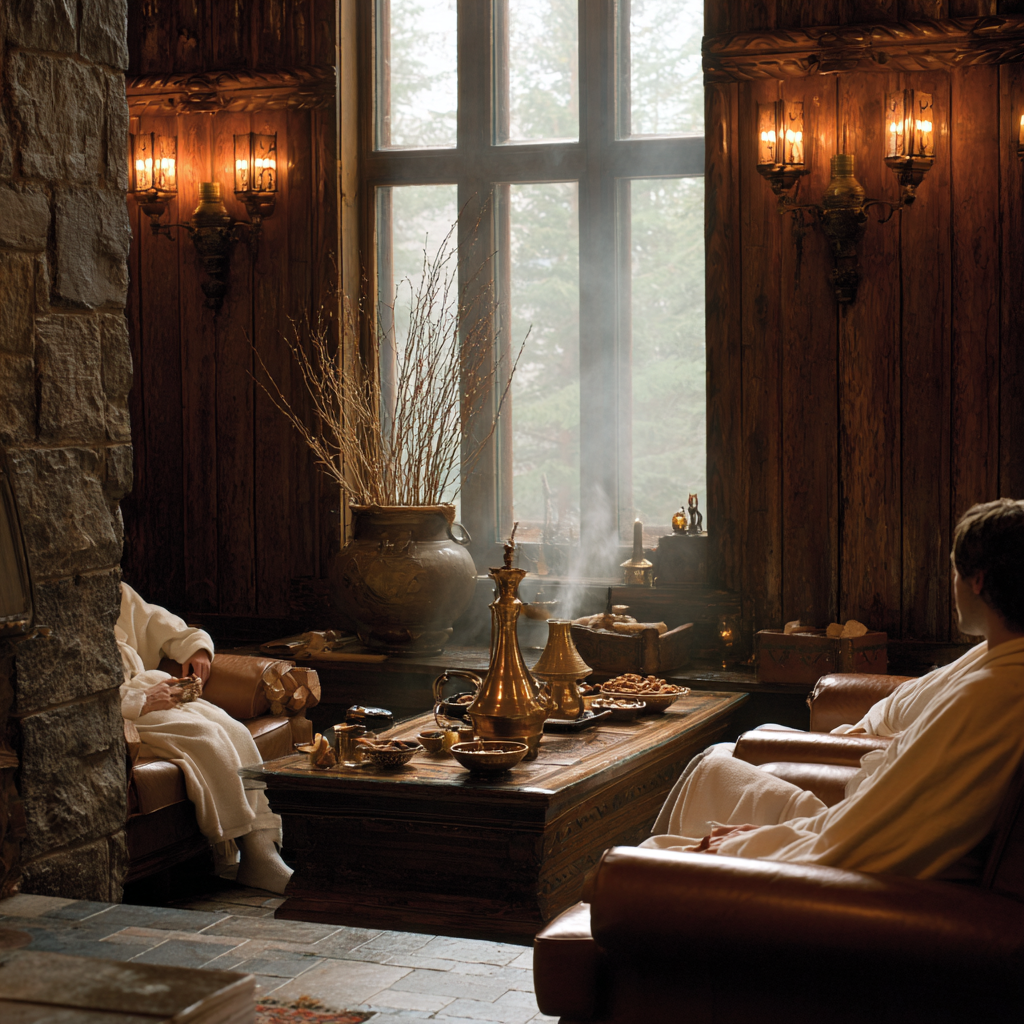
Between rounds, you return to the rest room. You wrap yourself in linen. You sit with a glass of spring water, a cup of tea poured from a brass samovar, honey, walnuts, dried fruit. You do nothing. You say whatever comes to mind, or nothing at all.
The rest is not passive. This is when the ritual works on you. Your body is integrating everything — the heat, the cold, the release. Your nervous system is recalibrating. Conversations that happen in this room tend to be the most honest ones you've had in years.
Rest for 20 to 30 minutes. Then go back in.
Iron, magnesium, calcium, lithium, and silica — the same mineral composition found in Europe's most celebrated thermal springs.
Evian: 357 · Fiji: 210 · Tap water: ~50
Full mineral analysis above ↑
04
The Thermal Soak
104°F · Wood-Fire Heated · Starlight
The final act. The body has done its work. Now it simply floats.
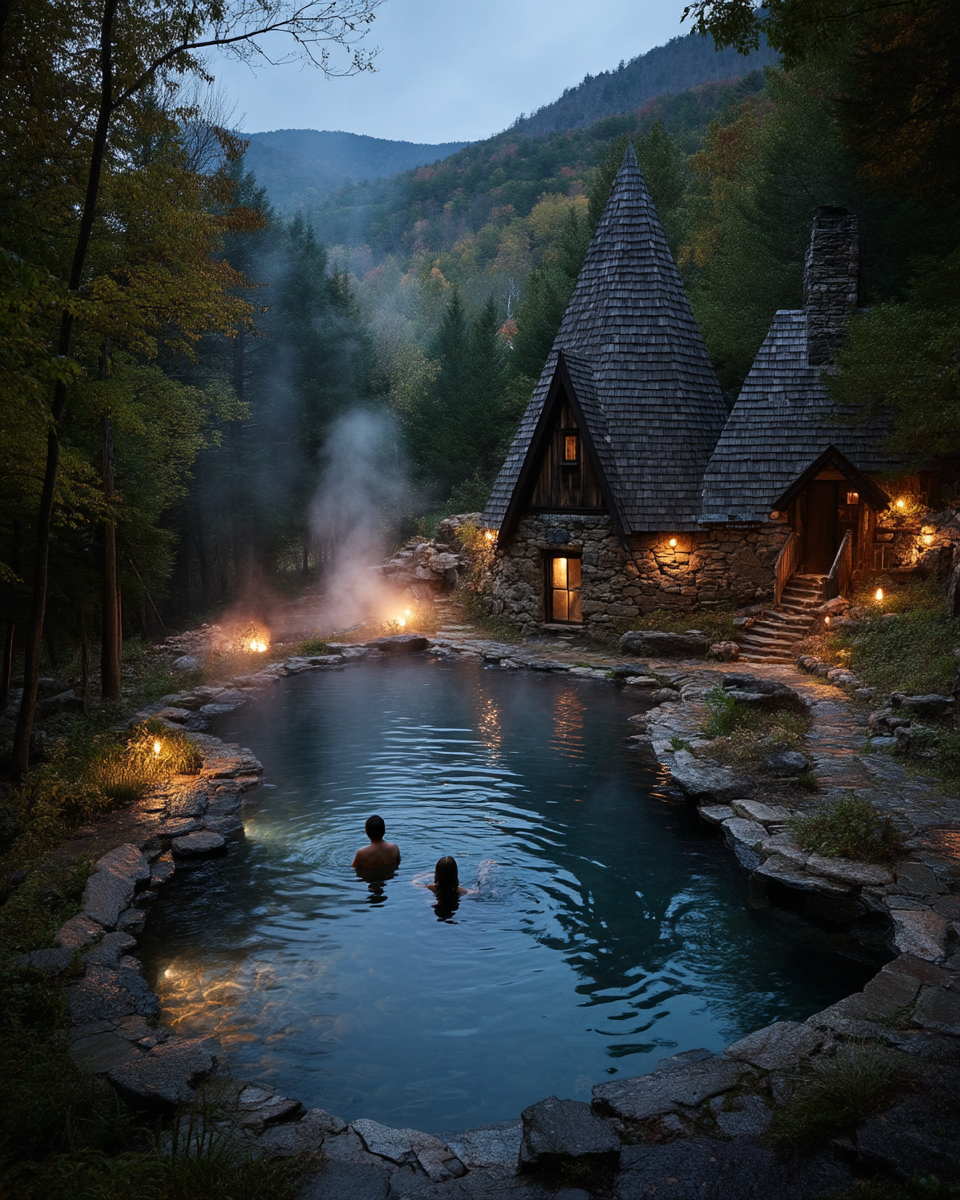
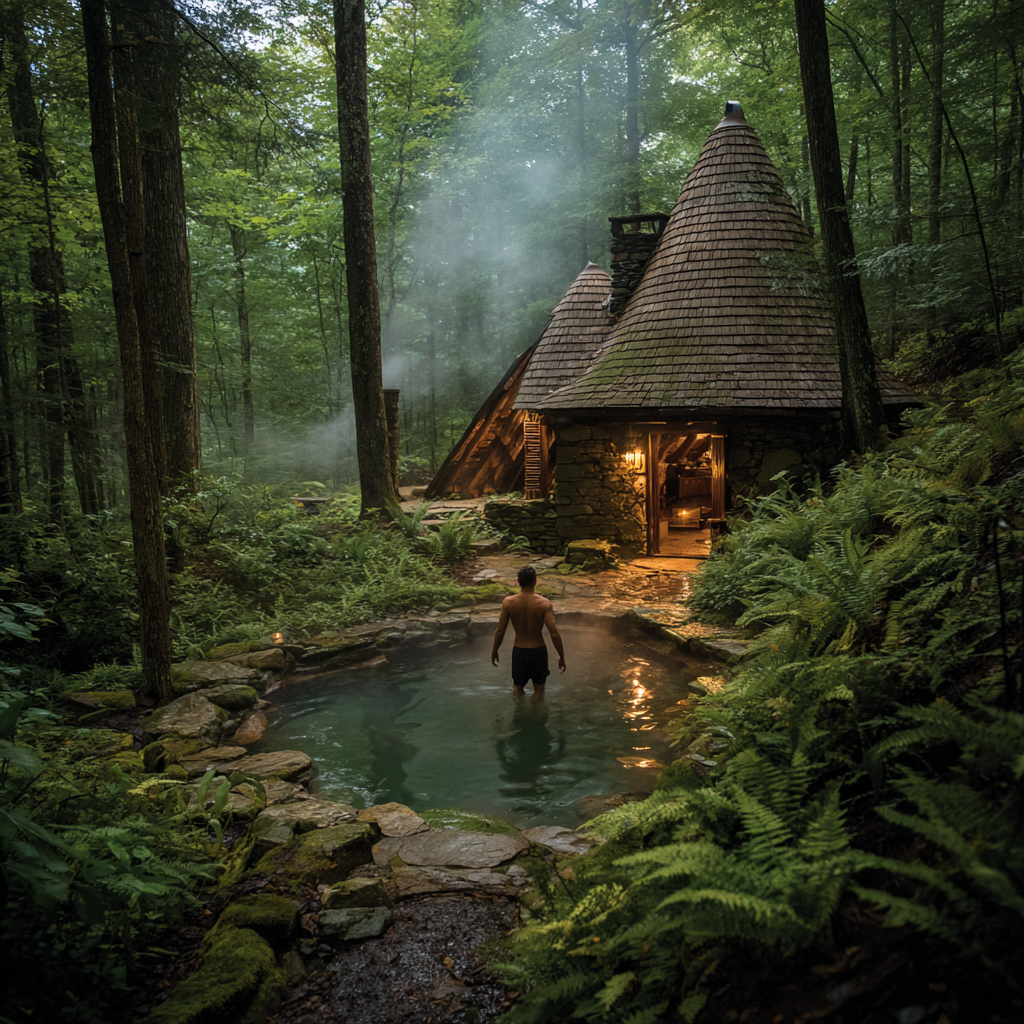
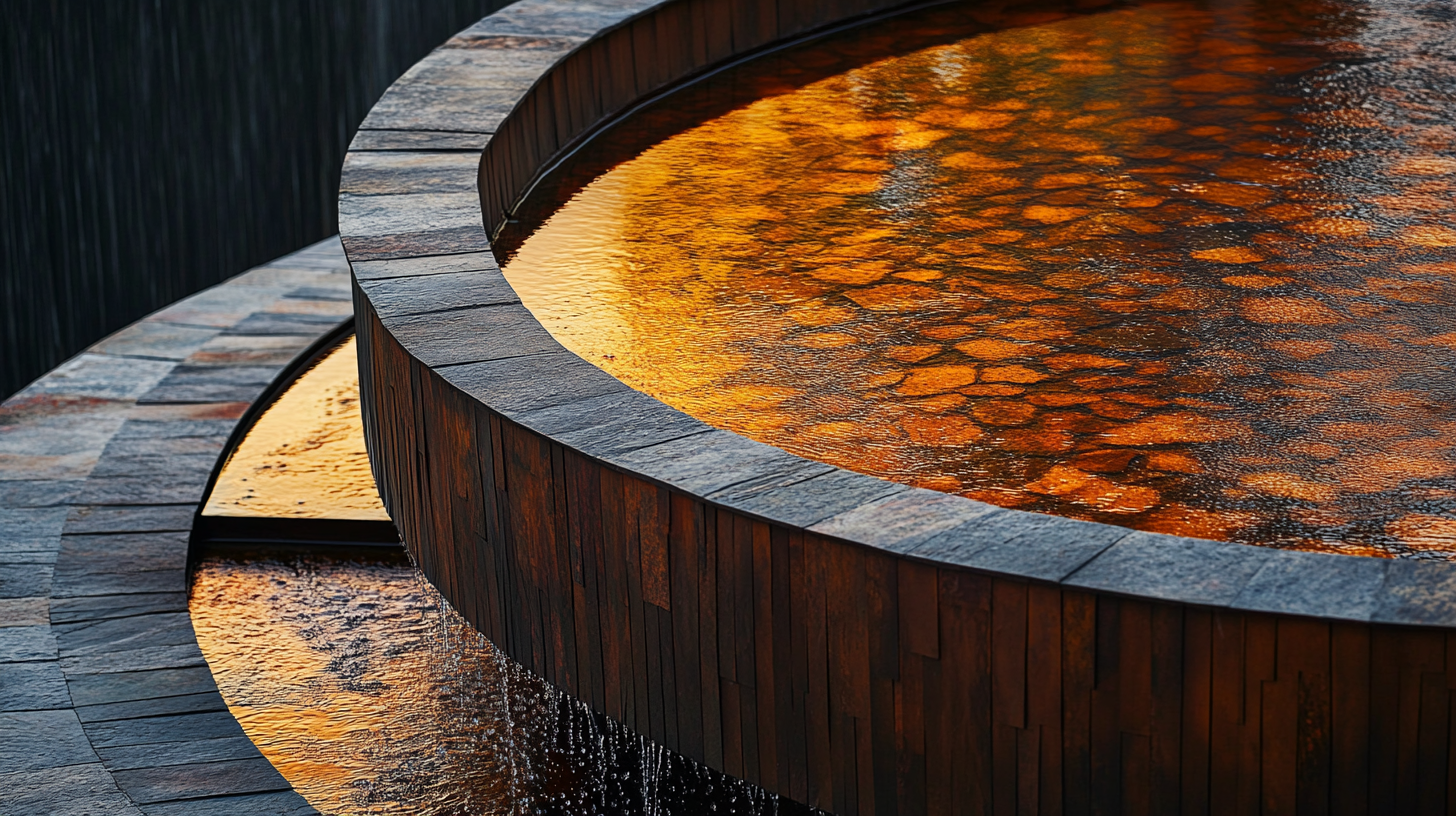
After your final banya round and plunge, you sink into an outdoor mineral pool heated to 104°F by a wood-fire boiler. The water carries iron, magnesium, calcium, and trace lithium — the same composition found in Europe's most celebrated healing springs.
Steam rises into cold Appalachian air. The fire glows. If the timing is right, stars are visible above the hemlock canopy. There is nothing required of you here. No phone. No schedule. Just the ancient intelligence of mineral water doing what it has always done to the people who give themselves to it.
Most guests stay until the water goes cold. Some stay longer.
05
The Water
52°F · Live Spring · On Tap Throughout
You will taste the difference before you can explain it.
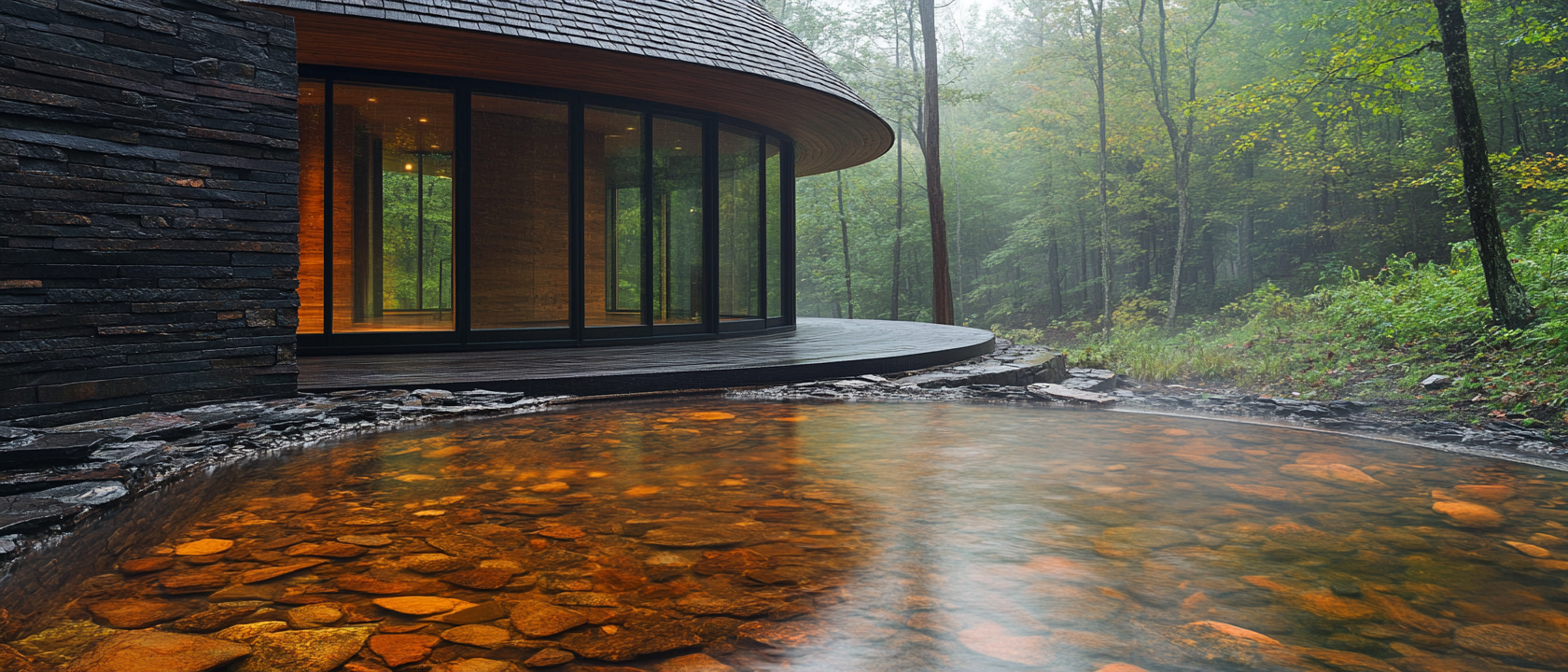
Whiskey Run's iron-rich mineral spring water flows on tap throughout the entire property — in the banya, the rest rooms, the cabins, the villas. We do not filter out its minerals. We do not run it through reverse osmosis. We do not add anything to it.
This is water that has been moving through Laurel Highlands limestone for thousands of years, picking up iron, magnesium, silica, and trace lithium along the way. The Lenape called it medicine water. The Pittsburgh Gazette called its effects extraordinary in 1803. Generations of healers, seekers, and exhausted humans have come to this specific ground for this specific reason.
We are not selling you water. We are giving you back something that was always here.
“You arrive carrying everything. You leave carrying only yourself.”
Ten presidents sought these waters. The tribes held them sacred. We are simply returning them to their purpose.
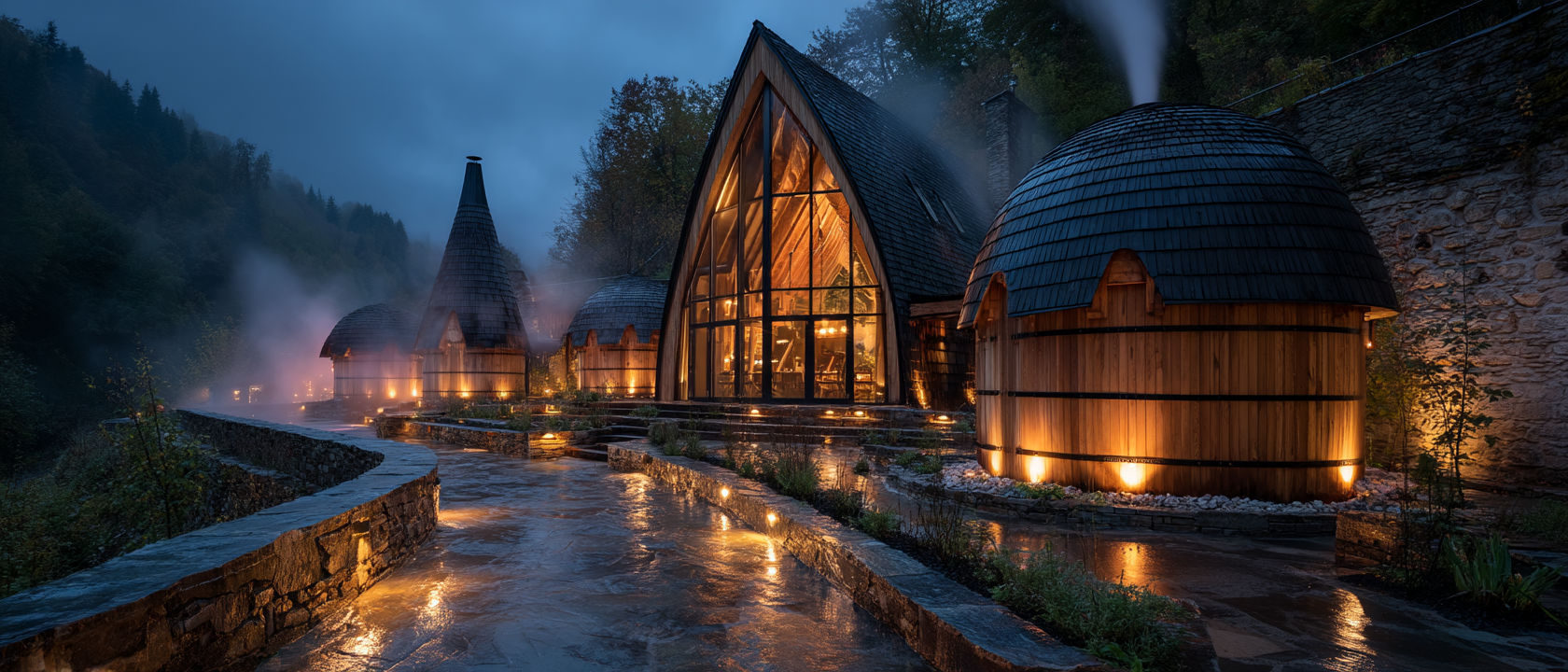
The ridgelines that claimed
Frank Lloyd Wright
are still here.
Wright came here once and spent the rest of his life trying to deserve it.
He came to the Laurel Highlands in 1935 and built Fallingwater — not on a waterfall, but of one. The house doesn't sit above the water; it grows from the same rock the water falls over. He couldn't leave. He came back and built Kentuck Knob seven miles south. His students followed and built at Polymath Park. For a hundred years, the most ambitious architects in the world have been drawn to these ridgelines — not to conquer them, but to apprentice themselves to something older and wiser.
The Record
Whitewater in the morning. A five-star dinner by dark.
The Youghiogheny River cuts through Ohiopyle's 20,500 acres of wilderness — Class III-IV rapids that leave you breathless, trails through hemlock groves that haven't changed in millennia, and the 150-mile Great Allegheny Passage stretching from Pittsburgh to Cumberland. Seven Springs rises from the ridgeline with skiing that starts in November and golf that runs until October. Ligonier sits in its valley like something from a storybook — a town built around a Revolutionary War fort, with farm-to-table restaurants and galleries tucked into 18th-century storefronts. Nemacolin glitters in Farmington with its Forbes Five-Star spa and Pete Dye course.
Through all of it — the same mist, the same ancient forest, the same silence that drew Wright here in 1935 and never fully let him go.
The Land, Season by Season
Spring
Waterfalls at full voice.
- Buttermilk Falls in peak flow
- Wildflower trails through hemlock groves
- Trout season opens on Whiskey Run
- Fallingwater with no summer crowds
- Mineral springs at their coldest and clearest
Summer
The forest holds the heat.
- Ohiopyle Class III–IV whitewater
- Swimming holes along Cucumber Run
- Great Allegheny Passage cycling
- Farm markets in Ligonier
- Long evenings in the thermal pool
Autumn
Better than New England. Quieter.
- Appalachian foliage from the ridgeline
- Harvest dinners in Ligonier Valley
- Seven Springs golf until October
- The forest canopy turns gold above the banya
- Hunting season opens across the corridor
Winter
The silence becomes total.
- Seven Springs skiing from November
- Hidden Valley resort — 26 trails
- Snow-covered hemlock above the cold plunge
- Banya season at its most powerful
- The property under two feet of Appalachian quiet
Everything extraordinary in this region was built by someone who fell in love with this land. Carpathique is next.